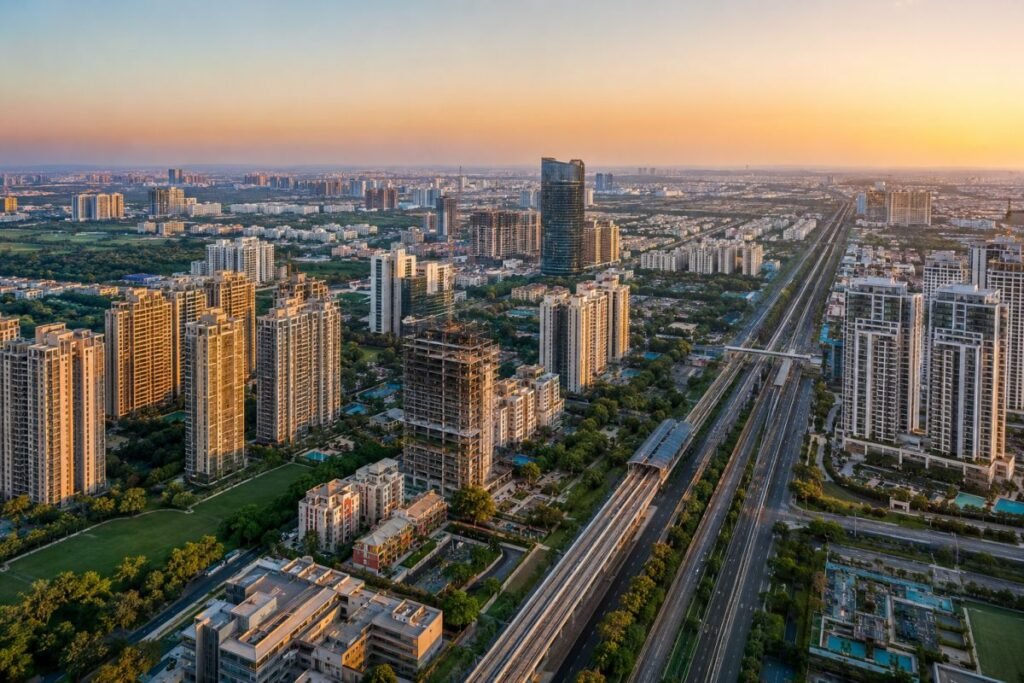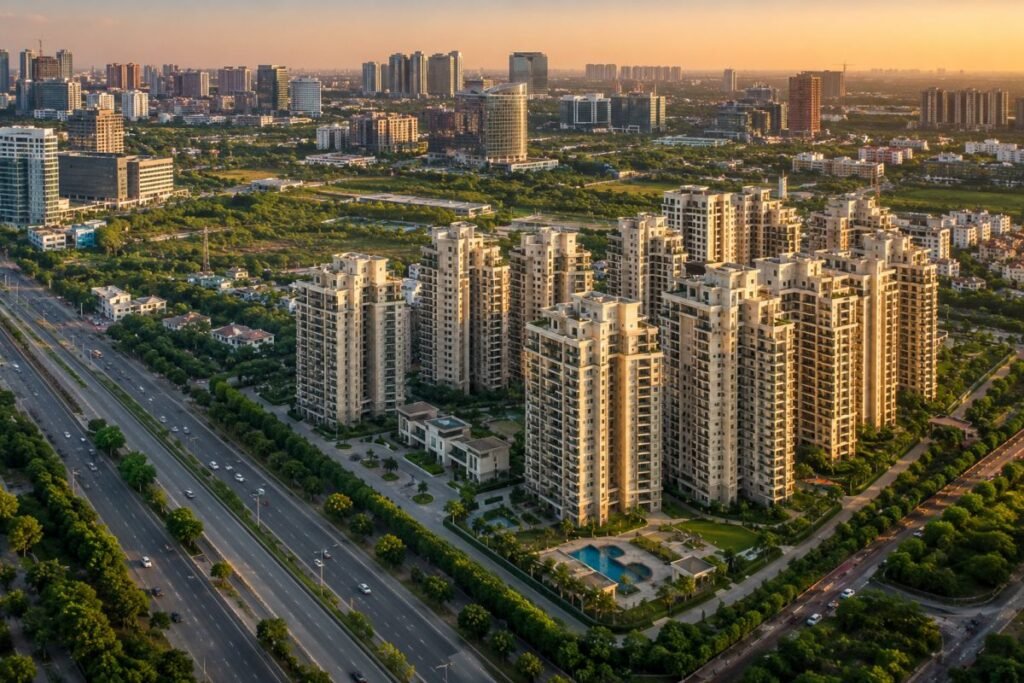
Property in Gurugram has transformed from a sleepy border town into India’s most vertically dense commercial capital. For non-resident Indians looking to park capital in a rupee-denominated asset that also delivers utility, NRI Guide to Buying Property presents a compelling case. The city hosts the highest concentration of Fortune 500 office spaces in India, sits a 20-minute drive from Indira Gandhi International Airport, and offers residential inventory ranging from compact studio apartments to sprawling golf-facing villas. But buying real estate from overseas is not a simple wire transfer. It involves Reserve Bank of India (RBI) regulations, specific tax withholding obligations, and location choices that can vary dramatically block by block. This guide unpacks the legal, financial, and geographic variables so you can invest with precision rather than hope.
Why Property in Gurugram Continues to Attract NRI Capital
The National Capital Region has always attracted diaspora capital, but Gurugram has pulled ahead of Noida and central Delhi suburbs for three structural reasons. First, employment density: the city houses over 250 of the Fortune 500 companies’ India headquarters, creating sustained rental demand from expatriate and senior Indian management. Second, infrastructure maturity: the Delhi-Jaipur highway (NH-8), the operational Dwarka Expressway, and the expanding metro network have reduced commute friction to Delhi and the airport. Third, product depth: unlike Mumbai’s constrained land supply or Bangalore’s sprawl, Gurugram offers organised inventory across price segments — from mid-segment 2-BHK units to branded luxury developments. For an NRI investor, this means liquidity when you need to exit and rental yield that typically ranges between [verify: 3.5%–4.5%] for premium units and slightly higher for mid-segment stock.

Regulatory Framework: What NRIs Can and Cannot Purchase
Under the Foreign Exchange Management Act (FEMA), 1999, NRIs and Persons of Indian Origin (PIOs) are permitted to acquire immovable property in India by way of purchase, subject to certain conditions.
Permitted acquisitions include:
- Residential apartments and independent houses in approved colonies
- Commercial office space and retail shops
- Residential plots within municipal limits
Prohibited acquisitions include:
- Agricultural land (unless inherited)
- Farmhouses
- Plantation property

All purchase consideration must be paid through normal banking channels using funds held in NRE, NRO, or FCNR accounts. Cash transactions are strictly monitored and should be avoided. Most NRIs execute the transaction through a registered Power of Attorney (POA) holder — typically a family member or legal representative in India.
The POA must be executed on stamp paper, notarised in the country of residence, apostilled under the Hague Convention, and subsequently adjudicated and registered in Haryana to be valid for property registration.
Best Corridors and Sectors to Buy Flat in Gurugram
Gurugram is a city of corridors. Choosing the wrong micro-market can mean the difference between 8% annualised appreciation and a stalled project. Here is how the primary NRI-focused corridors compare.
Dwarka Expressway
The Dwarka Expressway belt — spanning Sector 99 through Sector 113 — has transitioned from speculative farmland to a functioning urban spine. With the expressway fully operational, the corridor now offers direct, signal-free connectivity to IGI Airport and Delhi’s Dwarka sub-city.
NRIs who travel frequently or plan eventual retirement in India favour this belt for its airport proximity and relatively organised master planning. Inventory here is dominated by mid-to-luxury apartments from tier-1 developers. Capital appreciation over the last [verify: 36 months] has outperformed legacy Gurugram sectors, though buyers should verify possession timelines carefully as some pockets still await final municipal infrastructure.
Golf Course Extension Road
If the Dwarka Expressway is about connectivity, Golf Course Extension Road is about prestige. Flanked by the Aravalli biodiversity zone on one side and the established Golf Course Road on the other, this corridor hosts Gurugram’s most expensive per-square-foot transactions. Sector 58 through sector 67 form the core. Sector 65, in particular, offers a rare combination of established social infrastructure — top-tier schools, tertiary hospitals, and high-street retail — within a 3-kilometre radius. The buyer profile here is the HNRI looking for a dollar-hedged trophy asset rather than pure rental yield.
Southern Peripheral Road and New Gurugram
The SPR corridor functions as the southern bypass, connecting NH-8 to Sohna Road and intersecting with the KMP Expressway. Southern Peripheral Road is still in its infrastructure deployment phase, which means lower entry prices but higher execution risk. It suits NRIs with a 7–10 year horizon who want to front-run the city’s geographic expansion. Further west, New Gurugram along NH-8 (Sectors 80–95) has seen concentrated launches from organised developers targeting the mid-segment buyer who wants highway connectivity without Golf Course Road price tags.

| Corridor | Price Band (per sq ft) | Buyer Profile | Key Advantage | Risk Level |
|---|---|---|---|---|
| Dwarka Expressway | ₹11,000–16,000+ | Frequent flyers, end-users | IGI Airport (20 min) | Medium |
| Golf Course Ext Road | ₹14,000–23,000+ | HNI capital preservation | Social infra, metro | Low |
| Southern Peripheral Rd | ₹9,600–18,000+ | Value investors, long hold | KMP intersection | Medium-High |
| New Gurugram | ₹6,500–10,000 | First-time NRI buyers | NH-8, Delhi-Jaipur | Medium |
Taxation, TDS, and Repatriation Rules
Tax compliance is where most NRI transactions face friction. Understanding the withholding and repatriation framework before you sign an agreement is essential.
Purchase-side TDS: If you are buying from a resident Indian and the consideration exceeds ₹50 lakh, you must deduct 1% TDS and deposit it via Form 26QB. If the seller is an NRI, the withholding obligation jumps to 20% (plus applicable surcharge and cess) on the capital gains component, and the buyer must obtain a TAN to file Form 27Q.
Capital Gains on Sale: Short-term capital gains (property held less than 24 months) are taxed at your applicable income-tax slab. Long-term gains attract a 20% tax with indexation benefit. Section 54 and 54F exemptions are available if proceeds are reinvested in another residential property or capital-gain bonds.
DTAA Benefits: India has signed Double Taxation Avoidance Agreements with the UAE, USA, UK, Singapore, and most major NRI domiciles. You can claim foreign tax credit for Indian taxes paid, but you must file returns in India and retain Form 15CB/15CA from a chartered accountant for remittances.
Rental Income: Lease income is taxed at slab rates after a standard 30% deduction under Section 24. Repatriation of rental income is permitted up to USD 1 million per financial year from NRO accounts, provided you have filed your Indian tax return.
Sale Proceeds Repatriation: If the property was purchased through NRE funds, the entire post-tax sale proceeds can be repatriated without the USD 1 million cap. NRO-funded purchases face the cap. You will need a certificate from a Chartered Accountant in Form 15CB and RBI reporting through Form 15CA.
Financing and Payment Structure
Most Indian banks and housing finance companies extend home loans to NRIs, but terms differ from resident products:
- Loan-to-value (LTV) is typically capped at 75% for loans above ₹75 lakh and 80% below that threshold
- Maximum tenure ranges from 15 to 30 years, subject to retirement age or 60 years, whichever is earlier [verify: specific bank age norms]
- Interest rates for NRI borrowers generally carry a 10–25 basis point premium over resident rates.
- Repayment must originate from NRE, NRO, or rental income accounts; overseas salary credits to Indian loan accounts are permitted through normal banking channels
- Pre-EMI or construction-linked plans are common for under-construction units, but NRIs should weigh the opportunity cost of capital against possession delays
Documentation requirements include: attested passport copy, valid visa or OCI/PIO card, overseas employment contract, last six months’ NRE/NRO bank statements, Indian PAN card, salary slips or tax returns from the host country, and the notarised POA.
Due Diligence Checklist Before You Buy Flat in Gurugram
Before transferring earnest money, verify the following:
- RERA Registration: Cross-check the project on the Haryana RERA portal. Note the registration number, promised completion date, and any complaint history.
- Title Chain: Insist on a title search report covering the past 30 years. Agricultural land conversions must show Section 5 and 7 licences under the Haryana Development and Regulation of Urban Areas Act.
- Builder Track Record: Examine delivery timelines for the developer’s last three projects in the same micro-market. Established developers like DLF have navigated multiple cycles with relatively stable execution.
- Project-Specific Checks: For premium branded residences such as Adani Marq, evaluate the amenity maintenance cost structure and the developer’s property management tie-ups, which matter significantly when you are managing the asset remotely.
- NOCs: Confirm approvals from the fire department, Haryana State Pollution Control Board, and the airport authority (AOCC) for high-rise projects within the flight path funnel.
- Payment Plan Risk: Construction-linked plans reduce capital-at-risk before possession, but verify that the builder has not front-loaded costs. Possession-linked plans offer more security but demand higher initial outlay.

Final Word: Is Property in Gurugram Right for Your Portfolio?
Property in Gurugram remains one of the most structurally sound NRI investments in Indian real estate, but only when the corridor, developer, and legal structure align. Avoid pre-launch speculation unless you have on-ground intelligence. Prioritise ready-to-move or near-possession inventory in corridors with proven demand drivers, and always route transactions through documented banking channels with proper tax withholding.
Explore curated NRI-ready listings, corridor-wise price intelligence, and verified project reviews on AssetBulls. Our advisory team maps every recommendation to actual Gurugram transaction data — no generic advice, no inventory pushing. Schedule a consultation to align your investment with the right sector and developer.
Frequently Asked Questions NRI Guide to Buying Property in Gurugram
Q: Can NRIs legally buy flat in Gurugram without visiting India?
A: Yes. Under FEMA regulations, NRIs can purchase residential property in Gurugram without physical presence by executing a registered Power of Attorney (POA) in favour of a representative in India. The POA must be notarised and apostilled in your country of residence, then registered in Haryana. Funds must be remitted through normal banking channels from NRE/NRO accounts.
Q: What is the TDS obligation when an NRI buys property in Gurugram from another NRI?
A: If the seller is an NRI, the buyer must deduct 20% TDS (plus surcharge and cess) on the capital gains amount under Section 195 of the Income Tax Act. The buyer must obtain a TAN, file Form 27Q, and deposit the tax within the prescribed timeline. Failure to do so attracts interest and penalty.
Q: Which corridor is the safest to buy flat in Gurugram for long-term investment?
A: Golf Course Extension Road and the mature sectors along NH-8 offer the lowest execution risk due to established social infrastructure and proven demand. Dwarka Expressway is ideal for frequent flyers. Southern Peripheral Road and New Gurugram offer higher appreciation potential but carry greater infrastructure-timeline risk.
Q: Can rental income from property in Gurugram be fully repatriated?
A: Rental income can be repatriated up to USD 1 million per financial year from an NRO account, provided you have paid applicable taxes in India and filed your return. There is no repatriation cap on rental income credited to an NRE account, though most rental flows are routed through NRO accounts.
Q: Is a Power of Attorney mandatory for NRIs to buy flat in Gurugram?
A: It is not legally mandatory, but it is practically essential. A POA allows your Indian representative to sign sale deeds, register documents, and coordinate with developers on your behalf. Without it, you would need to be physically present for every procedural step, which is often impractical from overseas.