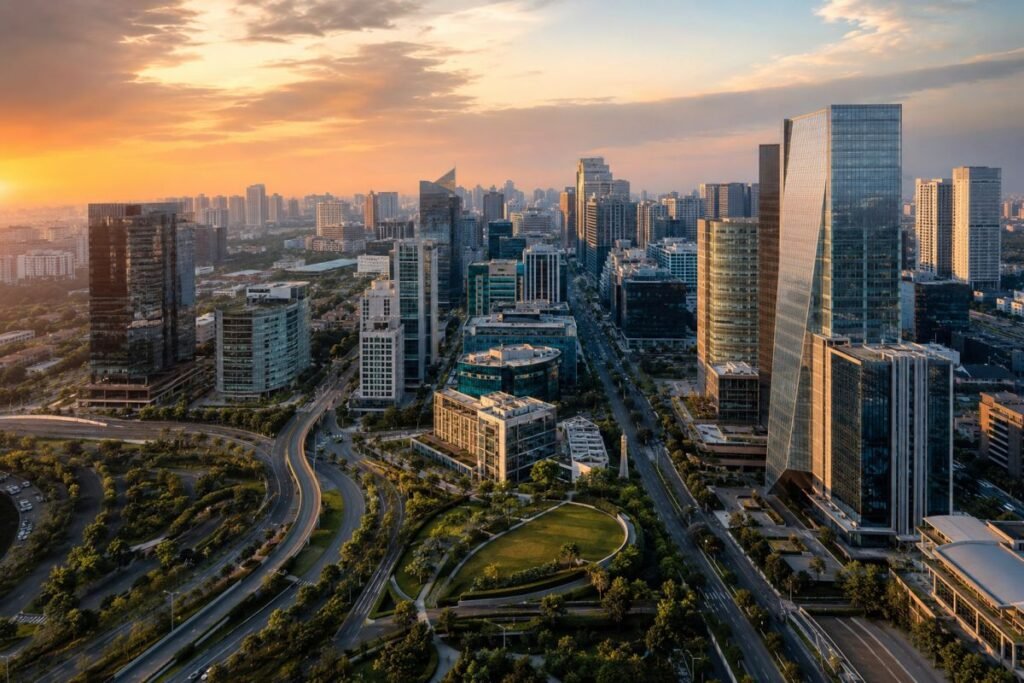
Dwarka Expressway Gurugram has emerged as one of the National Capital Region’s most closely watched residential corridors. What began as an infrastructure project to decongest the Delhi-Gurugram border has matured into a full-fledged real estate micro-market, drawing interest from end-users, institutional investors, and developer brands alike. For anyone mapping Gurugram’s growth vectors with seriousness, understanding this belt is no longer optional — it is essential.
This guide breaks down the corridor’s geography, connectivity, project landscape, and price dynamics. We examine what has already been delivered, what remains under construction, and where the investment case stands in 2026. Whether you are comparing corridors or evaluating specific inventory, the data here is framed to support a rational decision.
Dwarka Expressway Gurugram: Location & Corridor Overview
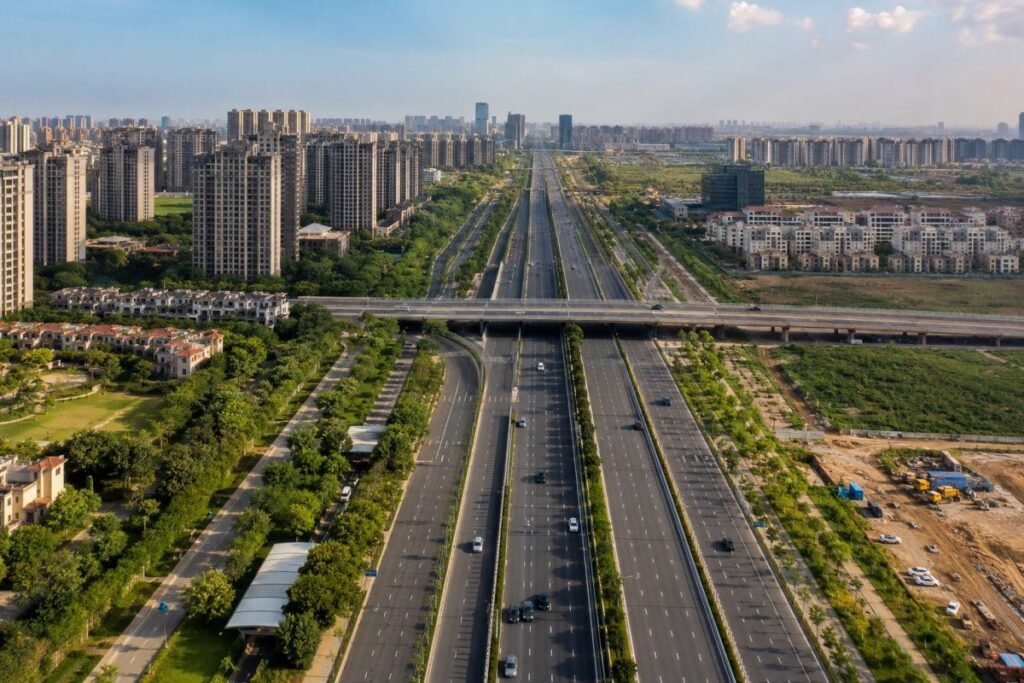
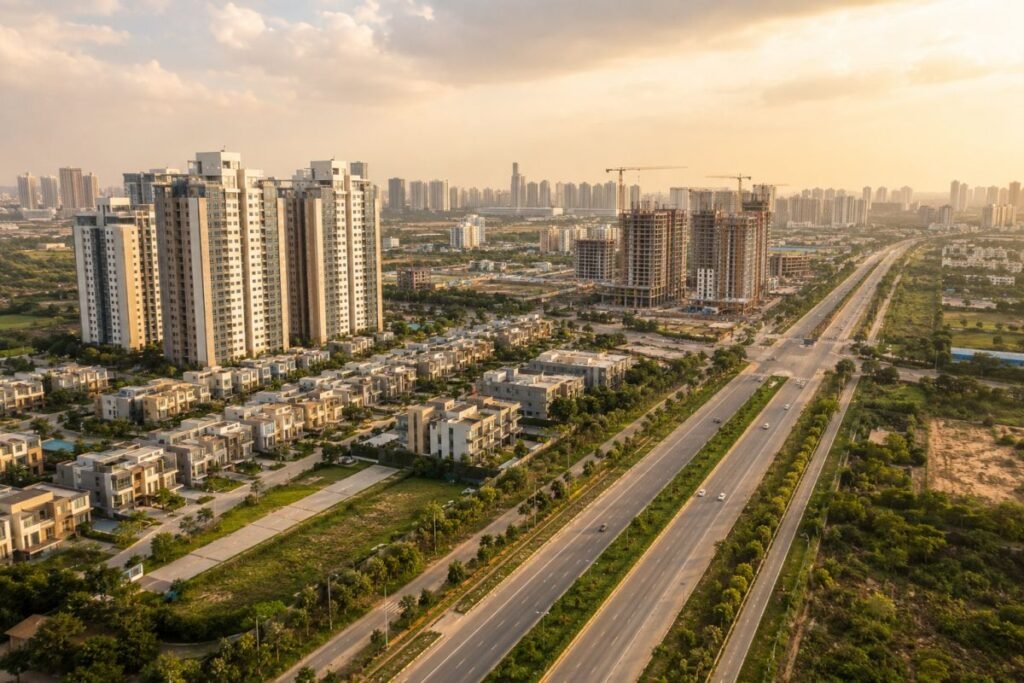
The Dwarka Expressway corridor — formally designated the Northern Peripheral Road (NPR) — is an eight-lane, signal-free expressway that connects Shiv Murti in Mahipalpur, Delhi, with Kherki Daula on NH-48 in Gurugram. The route runs parallel to the existing Delhi-Gurugram expressway but shifts the residential and commercial gravity distinctly northward, opening up sectors that were previously classified as agricultural hinterland.
In Gurugram, the expressway primarily serves Sector 99 through sector 113 along the northern edge, while its southern influence extends into Sector 37C, 37D, sector 88A, sector 88B, sector 89A, sector 89B, sector 90, sector 91, sector 92, and sector 95. These sectors have transitioned from unplanned villages to structured urban development within a single decade, driven by master plan amendments and developer land aggregation. The corridor’s strategic importance lies in its ability to offer direct Delhi connectivity without the chronic bottleneck of the MG Road or Hero Honda Chowk intersections that plague the older Delhi-Gurugram route.
Connectivity: The Infrastructure Story
Real estate along any corridor is only as strong as its access infrastructure. On this metric, Dwarka Expressway Gurugram scores highly — with the important caveat that some nodes are fully operational while others remain works in progress.
Road Networks
The expressway itself is now largely operational, providing uninterrupted vehicular movement from Delhi to Gurugram. At its Gurugram terminus, it intersects with NH-48, allowing seamless access toward Jaipur, Manesar, and the upcoming Delhi-Mumbai Expressway. The Southern Peripheral Road (SPR) and Golf Course Extension Road (GCER) are accessible via internal sector roads, though last-mile connectivity in newly developing sectors can still be uneven.
Metro & Rail
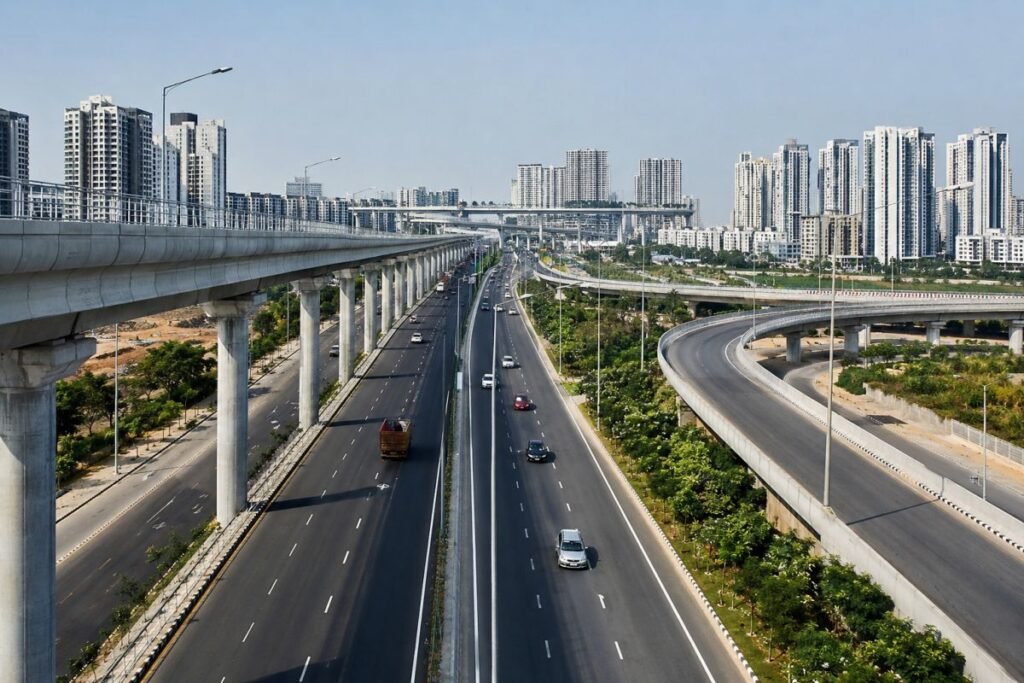
The Haryana Mass Rapid Transport Corporation (HMRTC) and Delhi Metro extensions have long been planned for this belt. As of 2026, the Grey Line extension and potential RRTS (Regional Rapid Transit System) integration remain under various stages of approval, tendering, and construction [verify: current metro line status and expected commissioning date for Dwarka Expressway sectors]. When commissioned, these links will compress commute times to central Delhi, Connaught Place, and IGI Airport significantly, altering the corridor’s tenant profile.
Airport Proximity
One of the corridor’s understated advantages is its proximity to Indira Gandhi International Airport. Depending on the exact sector, drive times to Terminal 3 range from 15 to 25 minutes via the expressway during non-peak hours [verify: current average drive time from Sector 109/110 to IGI Terminal 3]. This has made the belt particularly attractive to aviation-sector professionals, expatriates, and corporate executives with frequent international travel schedules.
Commercial Anchors
The corridor benefits from the Yashobhoomi (India International Convention & Expo Centre) in Dwarka Sector 25, the proposed Diplomatic Enclave II, and the emerging commercial districts along the Delhi side. Within Gurugram, commercial development is following residential absorption, with retail high-streets, convenience shopping, and co-working spaces appearing in Sector 109 and sector 110 [verify: operational commercial centres and retail density].
Micro-Markets: Mapping the Sectors
Not all sectors along Dwarka Expressway Gurugram offer an identical risk-return profile. The corridor can be segmented into three distinct micro-markets, each at a different stage of maturity.
Western Sectors (99–113)
These sectors sit directly along the expressway’s Gurugram stretch and host the highest concentration of ready and near-ready inventory. Sector 109 and Sector 110 have seen maximum developer activity, with multiple possession-ready projects and operational maintenance services. These areas appeal to end-users seeking immediate occupancy and relatively established social infrastructure. However, premium pricing in these sectors leaves less room for aggressive capital appreciation compared to earlier entry points.
Southern Sectors (37C, 37D, 88–95)
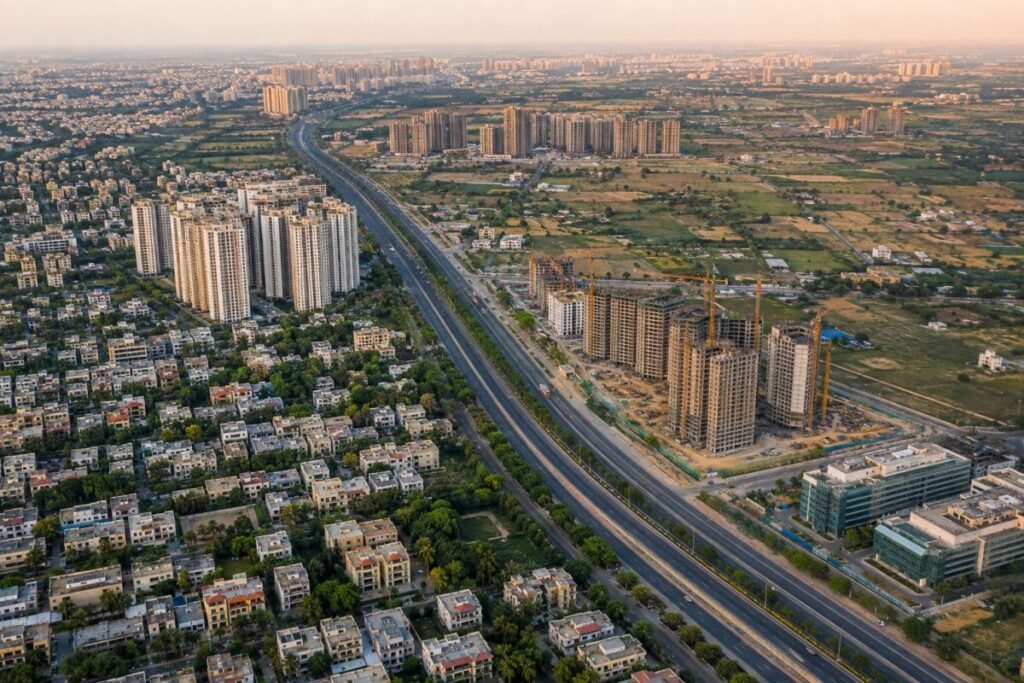
Sectors such as 37C, 37D, 88A, 89A, 90, and 92 are positioned slightly south of the main expressway but benefit from strong connectivity via dedicated sector roads. These pockets often offer better entry prices compared to the direct expressway-facing sectors. The trade-off is longer development timelines for supporting retail, healthcare, and educational infrastructure. For investors with a 5–7 year horizon, these sectors represent the classic infrastructure-led appreciation play.
Emerging Pockets
Beyond the formally mapped sectors, residual land parcels in the locality of Dwarka Expressway continue to attract plotted development and independent floor projects. These are higher-risk, higher-reward bets suited to local investors with appetite for pre-launch stage assets and tolerance for regulatory gestation.
Projects on Dwarka Expressway: The Developer Landscape
The residential landscape of Dwarka Expressway has drawn nearly every major national and regional developer active in the NCR. The result is a diversified project mix ranging from compact, efficiency-focused 2BHK apartments to expansive 4BHK luxury residences and low-rise independent floors.
Established Deliveries
Several projects have already achieved possession, giving buyers tangible product to evaluate before purchasing. DLF’s strategic land holdings in the broader New Gurugram zone, Godrej Properties’ mid-premium offerings with strong amenity packages, and Sobha’s quality-focused developments have set construction and finishing benchmarks. BPTP, Experion, and Signature Global have also delivered large-scale projects, particularly in Sectors 37D, 102, and 106 [verify: exact project names, unit mix, and possession dates for recently delivered inventory].
Flats on Dwarka Expressway: Under-Construction Inventory
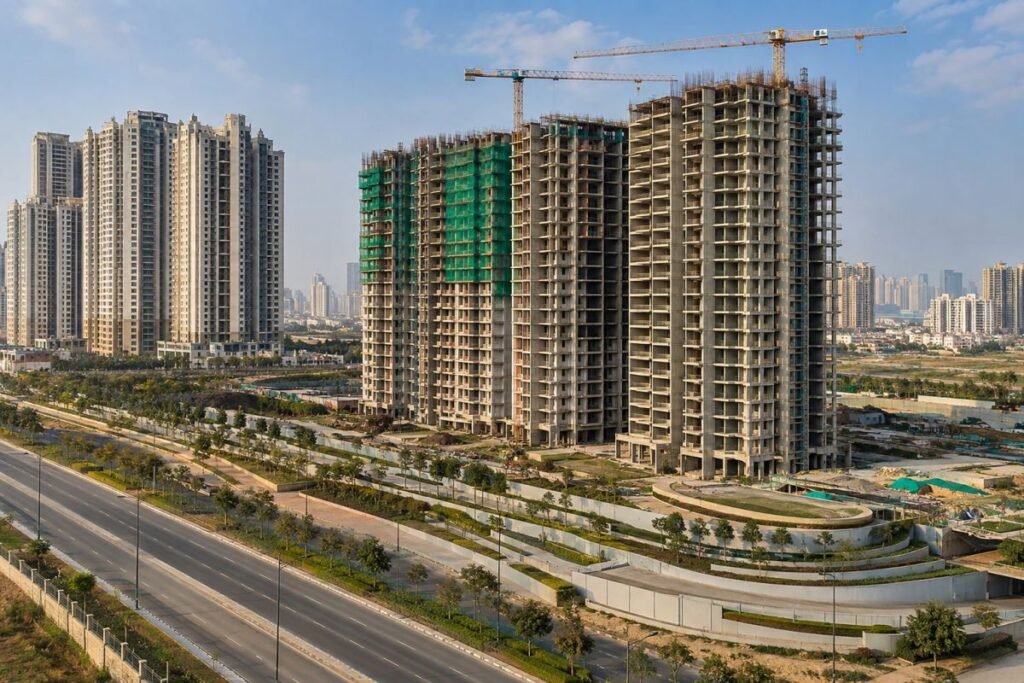
A significant volume of flats on Dwarka Expressway remains under active construction. Developers like M3M, Adani Realty, and Landmark have ongoing launches targeting the premium and luxury segments. These projects typically feature larger unit sizes (3BHK and above), podium-level amenities, clubhouses, and sustainable design certifications. Buyers evaluating under-construction inventory should scrutinise RERA registration numbers, construction-linked payment plans, and the developer’s track record of on-time delivery before committing capital [verify: representative RERA IDs for active under-construction projects].
Affordable & Mid-Segment Supply
Not all supply is positioned at the premium end. Government-backed affordable housing schemes and mid-segment projects by reputable builders have kept the corridor accessible to first-time buyers and young professionals. These units, often in the 60–120 square metre range, see consistent rental demand from the airport workforce, convention centre staff, and employees of nearby commercial developments.
Price Trends & Market Dynamics
Pricing along Dwarka Expressway Gurugram is highly granular. Sector location, project stage, builder brand, unit configuration, and floor rise all create wide dispersion within even the same postal zone.
Current Price Bands
As of 2026, ready-to-move inventory in prime expressway-facing sectors commands rates that reflect the area’s improved credibility [verify: current per sq ft price for ready apartments in Sectors 109-110]. Under-construction premium projects in these same sectors may trade at a 10–15 per cent discount to ready alternatives, depending on the payment plan structure and delivery timeline.
In the southern feeder sectors — 37C, 37D, 88A, 89A — entry prices are typically more accessible, often sitting in a lower band that attracts investors comfortable with longer gestation periods [verify: current per sq ft price for under-construction units in Sectors 37C-37D]. Independent floors and plotted developments follow a different valuation logic, often benchmarked against prevailing land rates and development charges rather than built-up area premiums.
Rental Market
The rental ecosystem is maturing steadily. Sectors with ready inventory and professional facility management — notably 109, 110, and 111 — generate monthly rents that support investor cash flows [verify: current rental range for 2BHK and 3BHK units in ready projects]. Yields typically fall in the 3–4.5 per cent net range, which is standard for Gurugram’s emerging corridors but below the 5–6 per cent achievable in fully mature micro-markets like Golf Course Road or MG Road.
Price Drivers
Several factors will influence capital values over the next 24 to 36 months:
- Commissioning of metro connectivity and RRTS integration
- Operationalisation of Yashobhoomi and adjacent commercial office districts
- Road widening and underpass completion at key junctions
- Delivery consistency from developers with large pending order books
- Opening of reputed schools and hospitals within a 3-kilometre radius
Investment Potential: A Balanced View
The investment case for investing along Dwarka Expressway rests on a straightforward thesis: Delhi-facing land in Gurugram is finite, and this corridor controls a significant share of the remaining developable stock. But thesis alone does not guarantee returns. A disciplined evaluation requires weighing structural strengths against lingering constraints.
Strengths
- Delhi Connectivity: Unmatched among Gurugram’s new corridors for direct Delhi access without toll-plaza congestion or Hero Honda Chowk delays.
- Infrastructure Momentum: Unlike stalled corridors elsewhere in the NCR, the expressway itself is largely built and functional, reducing binary risk.
- Developer Depth: Competition among reputable builders has raised product quality, transparency, and customer service standards.
- Employment Proximity: Airport, convention centre, and emerging commercial hubs create end-user demand independent of speculative investment cycles.
Constraints
- Last-Mile Gaps: Internal roads, street lighting, sewerage, and public transport in outer sectors remain inconsistent and can affect livability.
- Oversupply Risk: Certain configurations — particularly compact 2BHK units in non-prime sectors — face inventory overhang and competitive pricing pressure.
- Regulatory Delays: Some projects have experienced RERA-mandated deadline extensions. Buyers must verify actual construction progress rather than relying solely on marketing timelines [verify: specific projects with recent RERA timeline extensions].
- Social Infrastructure: Schools, hospitals, and organised retail are developing but remain behind the residential curve in sectors beyond 109–110.
Sector Comparison: Where to Buy?
| Parameter | Sectors 109–110 | Sectors 37C–37D | Sectors 88A–92 |
|---|---|---|---|
| Development Stage | Mature / Ready-to-move | Mid-development | Early development |
| Price Level | Premium | Moderate | Entry-level |
| Primary Connectivity | Direct expressway frontage | Via sector roads | Via sector roads |
| End-User Suitability | High | Moderate | Low-Moderate |
| Investment Horizon | 3–5 years | 5–7 years | 7+ years |
| Risk Profile | Low-Moderate | Moderate | Moderate-High |
This table is illustrative. Individual projects within each sector can deviate significantly from the median based on builder brand, exact location, and product specifications. Always validate against specific RERA disclosures and recent resale transaction data registered on the Haryana RERA portal.
Who Should Consider This Corridor?
Dwarka Expressway Gurugram is not a universal recommendation. It suits specific buyer and investor profiles defined by commute needs, risk appetite, and holding capacity.
End-Users
Families working in Delhi — particularly West Delhi, Dwarka, or airport zones — who want larger homes at lower per-square-foot rates than central Gurugram or Delhi itself. The trade-off is commute time to Cyber Hub, Udyog Vihar, or Sohna Road, which remains longer than from Golf Course Road or MG Road.
Long-Horizon Investors
Those with a 5–8 year holding period and tolerance for infrastructure gestation. The corridor’s full valuation will likely unlock only after metro operationalisation and commercial absorption mature on both the Delhi and Gurugram sides.
Aviation & Hospitality Professionals
Given airport proximity, pilots, cabin crew, ground operations staff, and hospitality managers form a reliable rental tenant base. Investors targeting rental yield should focus on ready 2BHK and 3BHK units near operational retail and transport nodes.
Profiles to Avoid
This corridor is less suitable if you require immediate rental yield above 5 per cent, need walking-distance access to premium healthcare or international schooling, or cannot tolerate construction-phase uncertainty and last-mile infrastructure gaps.
The Road Ahead: 2026 and Beyond
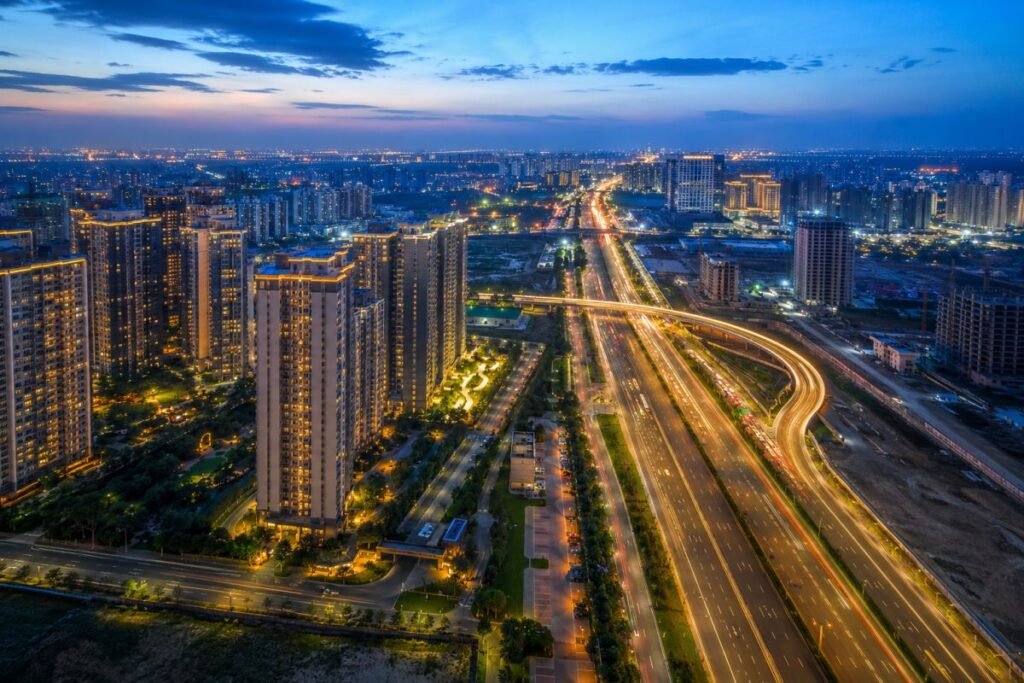
The Dwarka Expressway micro-market is transitioning from speculative frontier to structured suburb. The next phase of growth will be driven less by road announcements and more by metro commissioning, commercial occupancy rates, and developer delivery discipline. Sectors that currently feel peripheral may well become Gurugram’s new residential mainstream within this decade, much as Golf Course Extension Road did in the previous cycle.
For investors, the window for early-entry pricing has narrowed but not closed. The corridor still offers meaningful discounts to Golf Course Extension Road and SPR in comparable product categories. As Delhi’s western expansion continues and Gurugram’s northern boundary solidifies against the expressway, the strategic logic only strengthens. The question is no longer whether the corridor will develop, but whether your entry timing and project selection align with your financial goals.
Ready to explore specific opportunities? Browse curated listings and detailed project reviews on AssetBulls, or speak with our advisory team for a personalised investment roadmap tailored to your budget, risk appetite, and timeline.
Frequently Asked Questions
Q1: What are the top projects on Dwarka Expressway for investment?
A: Sectors 109 and 110 host several possession-ready projects by established developers, offering lower risk for conservative investors. For higher appreciation potential, under-construction projects in Sectors 37C and 88A by reputable builders may offer better entry pricing. Always verify RERA registration and construction progress before investing.
Q2: Are flats on Dwarka Expressway good for rental income?
A: Ready flats on Dwarka Expressway generate steady rental demand from airport professionals and Delhi commuters. Net rental yields typically range between 3–4.5 per cent, which is reasonable for an emerging Gurugram corridor but below mature micro-markets like Golf Course Road.
Q3: How is the metro connectivity for Dwarka Expressway Gurugram?
A: Metro connectivity is under development. The Grey Line extension and potential RRTS integration are expected to improve transit links significantly [verify: expected commissioning dates]. Until then, road connectivity via the expressway remains the primary access mode.
Q4: What is the price range for apartments on Dwarka Expressway?
A: Ready apartments in prime expressway-facing sectors command premium rates, while under-construction units in southern feeder sectors offer more accessible entry points [verify: current per sq ft price ranges]. Independent floors and plots follow separate pricing dynamics based on land values.
Q5: Is Dwarka Expressway better than Golf Course Extension Road for investment?
A: Both corridors serve different risk-return profiles. Dwarka Expressway Gurugram offers superior Delhi connectivity and lower entry prices but lags in social infrastructure maturity. Golf Course Extension Road is more established but priced accordingly. Your choice should depend on budget, holding period, and commute requirements.