
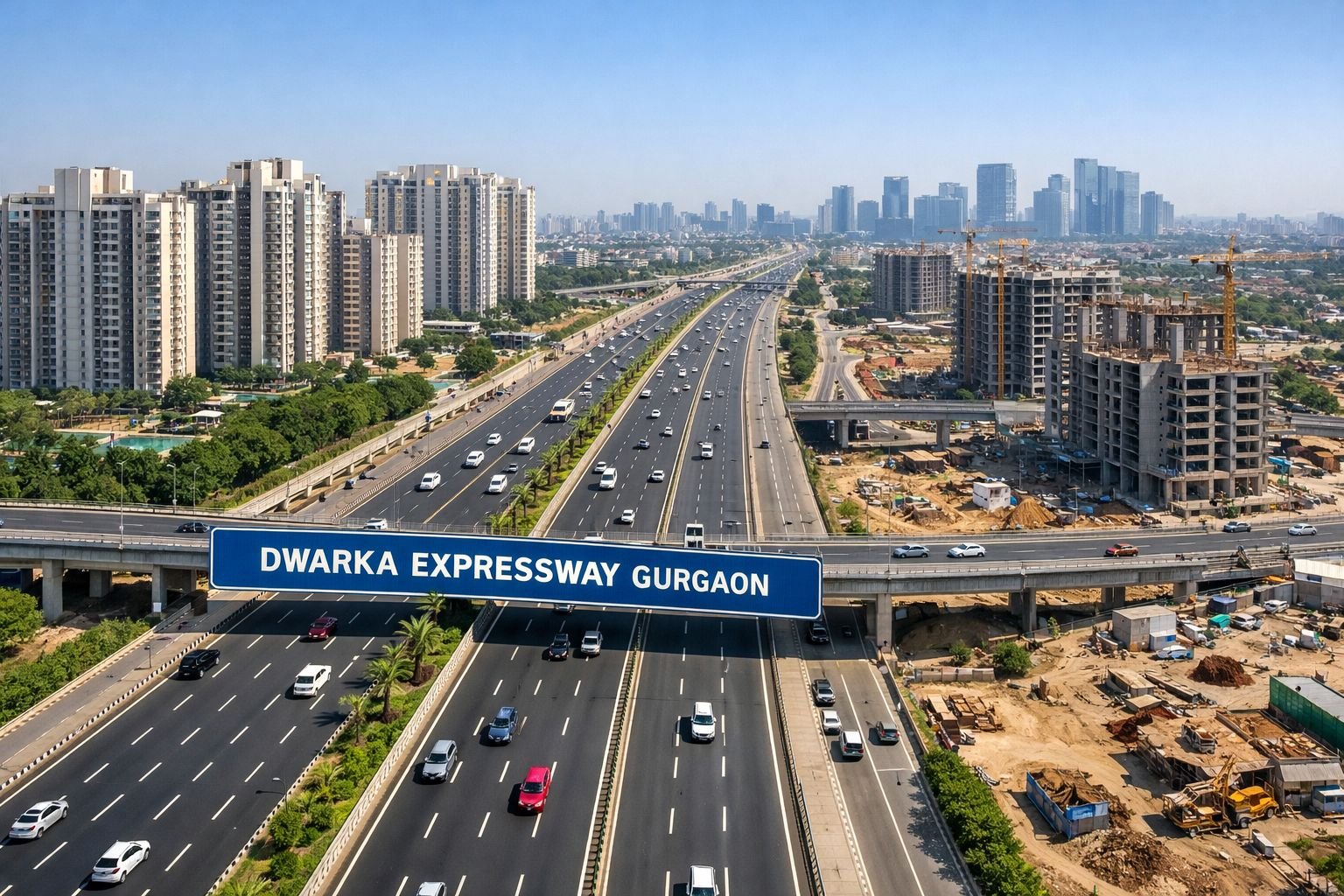
Dwarka Expressway is no longer a future bet — it’s where serious Gurgaon buyers are already deploying capital.
Over the last few years, this corridor has shifted from delayed infrastructure to one of the most actively traded real estate zones in NCR. Prices have moved sharply, developers are launching at a fast pace, and in many of the better-located projects, inventory is getting absorbed much faster than expected.
If you’re researching property in Dwarka Expressway Gurgaon, the key question today is not whether the area will grow — that phase is already underway. The real question is how much upside is still left, and more importantly, where it actually makes sense to enter in 2026.
Why Dwarka Expressway Is Seeing Real Demand (Not Just Hype)
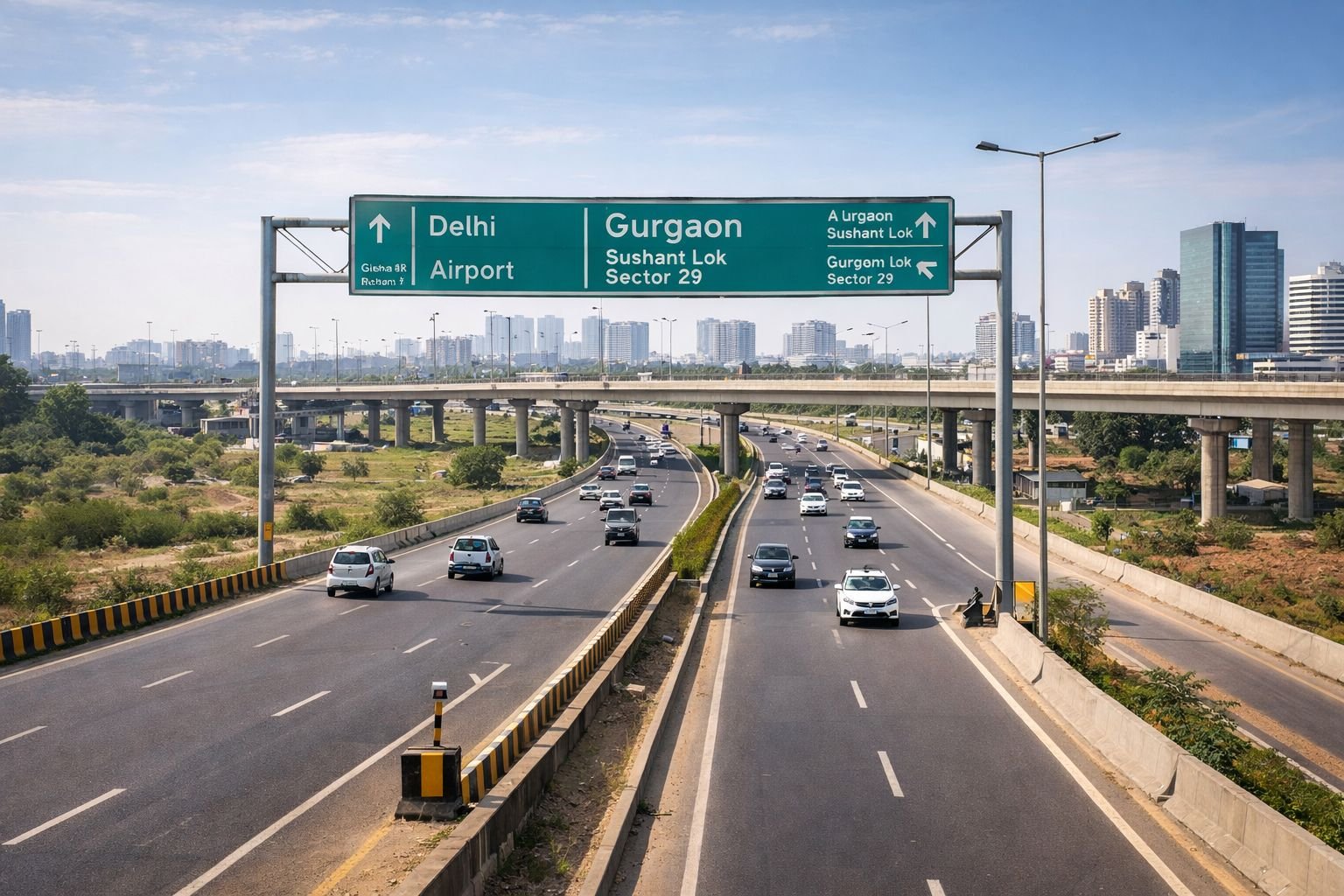
For years, Dwarka Expressway was discussed as a future opportunity. What has changed now is execution.
Connectivity to Delhi and IGI Airport has improved significantly, and that alone has shifted buyer perception. At the same time, the quality of projects being launched here has gone up, attracting a very different category of buyer compared to earlier cycles.
What’s important is that demand today is not just coming from investors. A growing number of end-users are actively evaluating this corridor, especially those looking for larger homes and better pricing compared to central Gurgaon.
Most buyers I’ve interacted with recently are not exploring the entire stretch. They are quickly narrowing down to sectors like 102, 103, 106, and 113, where both connectivity and project quality are more aligned.
What’s Happening on Ground Right Now
If you look beyond listings and talk to people actually tracking deals, a few patterns stand out.
Inventory in well-located projects is getting picked up quickly, often within weeks of launch. Developers are also becoming more confident with pricing and are increasing rates in phases rather than holding them flat.
There’s also a visible shift in buyer mindset. Instead of chasing the lowest price, people are now comparing projects based on execution track record, layout quality, and long-term livability.
This is a clear sign that the market is moving from speculation-driven to selection-driven.
Quick Snapshot: Dwarka Expressway Market (2026)
| Factor | Current Situation (2026) |
|---|---|
| Price Range | ₹8,500 – ₹18,000+ per sq ft |
| Market Type | Growth + Investor Driven |
| Demand Trend | High, especially in premium projects |
| Inventory Absorption | Fast (30–60 days in top projects) |
| Best For | Capital appreciation (3–5 year horizon) |
What This Means for You as a Buyer
If you’re entering this market today, you’re not early — but you’re also not late.
The easy gains have already happened in some pockets, but there is still room for growth, especially in the right sectors and projects. The difference now is that selection matters far more than timing.
Buyers who are taking time to compare sectors, evaluate builders, and understand pricing cycles are still finding strong opportunities. Those who enter blindly based on hype are more likely to overpay.
How Dwarka Expressway Property Prices Have Moved (2022–2026)
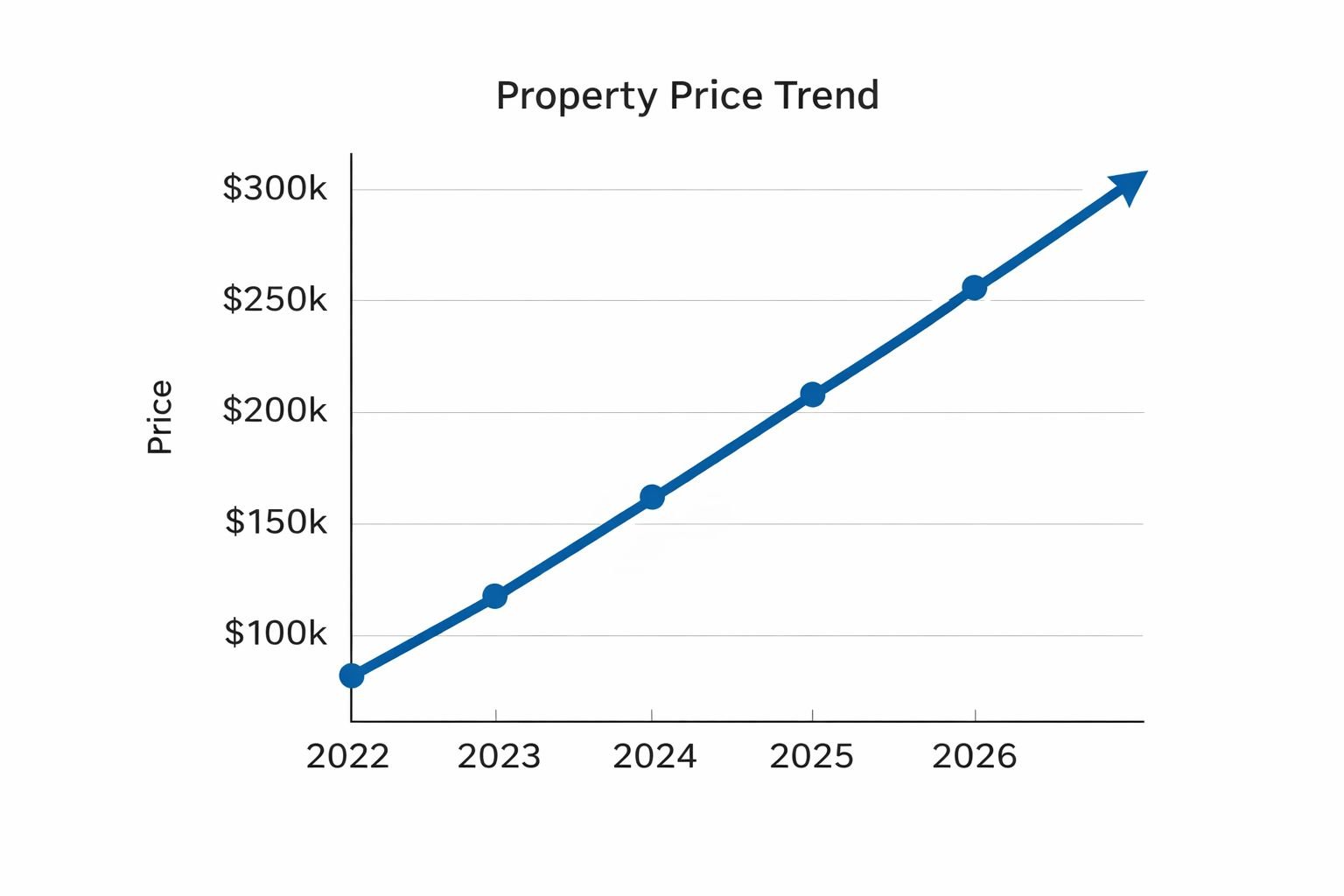
If there’s one thing that has defined Dwarka Expressway over the last few years, it’s the pace at which prices have moved.
Back in 2022, most projects across the corridor were still in the ₹6,000 to ₹8,000 per sq ft range. At that time, demand was largely speculative and many buyers were waiting for infrastructure clarity.
By 2024, as construction picked up and connectivity improved, prices moved into the ₹9,000 to ₹13,000 range. This was the phase where early investors started seeing visible gains and confidence began to build.
Now in 2026, pricing in many sectors — especially for premium projects — is hovering between ₹12,000 and ₹18,000 per sq ft, with select developments even going beyond that.
What makes this important is not just the increase, but the consistency. This hasn’t been a sudden spike — it has been a steady upward movement backed by real demand.
Price Growth Snapshot (Investor View)
| Year | Avg Price Range (₹/sq ft) | Market Stage |
|---|---|---|
| 2022 | ₹6,000 – ₹8,000 | Early-stage / speculative |
| 2024 | ₹9,000 – ₹13,000 | Growth phase begins |
| 2026 | ₹12,000 – ₹18,000+ | Active demand + premium expansion |
How Much Appreciation Has Already Happened?
If you compare 2022 to 2026, Dwarka Expressway has already delivered around 35% to 60% appreciation, depending on sector and project quality.
That’s a significant jump in a relatively short period, which naturally leads to the question most buyers are asking right now:
“Have I already missed the opportunity?”
Have You Missed the Entry Point?
The honest answer is — partially, but not entirely.
The lowest entry prices are clearly behind us. Buyers who entered between 2021 and 2023 have already seen strong gains.
However, this doesn’t mean the market has peaked.
What’s happening now is a shift from broad growth to selective growth. Earlier, almost any project in the corridor could see appreciation. Today, returns are becoming more dependent on:
- Sector selection
- Builder credibility
- Project positioning
In other words, the market is becoming more mature — and more selective.
What’s Driving Prices Up Even Now
Even after strong appreciation, prices are still moving — and there are clear reasons behind it.
Infrastructure is no longer a future promise; it is visible and usable. Developer confidence has increased, which is why pricing is being revised upward in phases rather than kept flat.
At the same time, supply is not unlimited. Land parcels are finite, and premium inventory is getting absorbed quickly, especially in well-located sectors.
One of the most telling signs is how fast new launches are selling. In several projects, a large portion of inventory is being booked within 30 to 60 days, which keeps pushing prices upward.
Where Prices Are Headed (Short-Term View)
While the pace of growth may not be as aggressive as the last few years, the direction still appears upward.
Prices are expected to continue rising gradually, especially in sectors with better connectivity and stronger project ecosystems. However, sharp jumps like earlier phases may become less frequent as the market stabilizes.
For buyers, this means the opportunity is still there — but it now requires better decision-making rather than just early entry.
What This Means for Your Entry Strategy
If you’re considering buying property in Dwarka Expressway Gurgaon today, the focus should not be on trying to “time the lowest price.”
Instead, it should be on identifying:
- Sectors that still have growth potential
- Projects where pricing is not yet fully stretched
- Developers with strong execution history
Buyers who approach the market this way are still finding opportunities. Those who delay too long expecting a major correction may find that prices continue to move gradually upward.
What Buyers Are Actually Choosing on Dwarka Expressway

If you move beyond listings and look at actual transactions, a clear pattern starts to emerge.
Buyers are no longer approaching Dwarka Expressway as a “cheap entry” market. That phase is over. Today, most serious buyers are focusing on quality, space, and long-term usability rather than just price.
There’s a visible tilt toward larger homes, especially 3 and 4 BHK configurations, and a strong preference for projects that offer a complete lifestyle rather than just basic residential towers.
Location within the corridor has also become a key filter. Projects closer to Delhi connectivity or those positioned within better-developed sectors are getting far more traction compared to isolated developments.
How Buyer Thinking Has Changed
A few years ago, the typical buyer in this market was primarily an investor looking for early entry. That has shifted.
Today, decision-making is far more layered.
Most buyers are comparing multiple projects before committing, looking closely at builder track record, layout efficiency, and how the project will feel once fully occupied. The conversation has moved from “Is this cheap?” to “Is this worth it?”
This is also why projects from more established developers are seeing stronger demand. Buyers are willing to pay a premium if they feel confident about delivery and long-term quality.
What Types of Projects Are Driving Demand
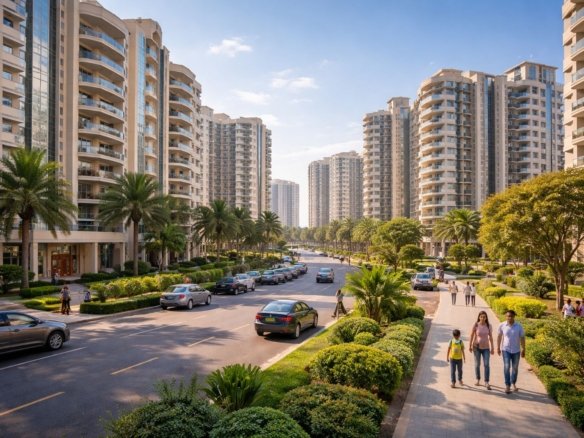
Dwarka Expressway is currently dominated by premium and upper mid-segment developments.
The most traction is happening in:
- High-rise luxury apartments with modern amenities
- Gated communities with lifestyle-focused planning
- Larger unit configurations (3 BHK and above)
Entry-level inventory still exists, but it’s no longer the primary driver of demand.
Projects like Central Park Delphine and AIPL Riviera in Sector 103 have helped reposition the corridor by setting new expectations in terms of pricing, design, and branding.
New Launch vs Ready-to-Move — What Buyers Prefer Right Now
This is one of the most important decisions buyers are making today.
New launches are clearly attracting investors because they offer lower entry points and stronger appreciation potential. Many of these projects are being absorbed quickly, especially in well-located sectors, which further reinforces price growth.
On the other hand, ready-to-move or near-possession properties are being explored more by end-users who want certainty and immediate usability. However, supply in this category is limited, and pricing is usually higher.
In simple terms, the market is split:
- Investors are leaning toward new launches
- End-users are leaning toward near-possession inventory
How Fast Projects Are Selling
One of the clearest indicators of demand strength is how quickly inventory is getting absorbed.
In several premium launches, a significant portion of units is being booked within 30 to 60 days. This is not uniform across all projects, but it is consistent enough in well-positioned developments to influence pricing across the corridor.
This kind of absorption cycle gives developers confidence to increase prices in phases, which is why buyers entering later often see higher entry points within the same project.
What Tenants and End-Users Are Prioritizing
Even though this is still largely an appreciation-driven market, end-user preferences are starting to shape demand more visibly.
Buyers and tenants are both paying attention to:
- Connectivity to Delhi and key office zones
- Availability of daily-use infrastructure
- Overall project livability once occupied
This is gradually shifting the market away from purely speculative buying toward more practical decision-making.
What This Means for You as a Buyer
If you’re entering Dwarka Expressway today, the biggest mistake would be treating all projects as equal.
The gap between a well-located, well-executed project and an average one is widening. Some projects are seeing strong absorption and steady price growth, while others are moving much slower.
This is why most experienced buyers are spending more time comparing options within the same sector rather than rushing into the first available deal.
Where It Actually Makes Sense to Buy Right Now
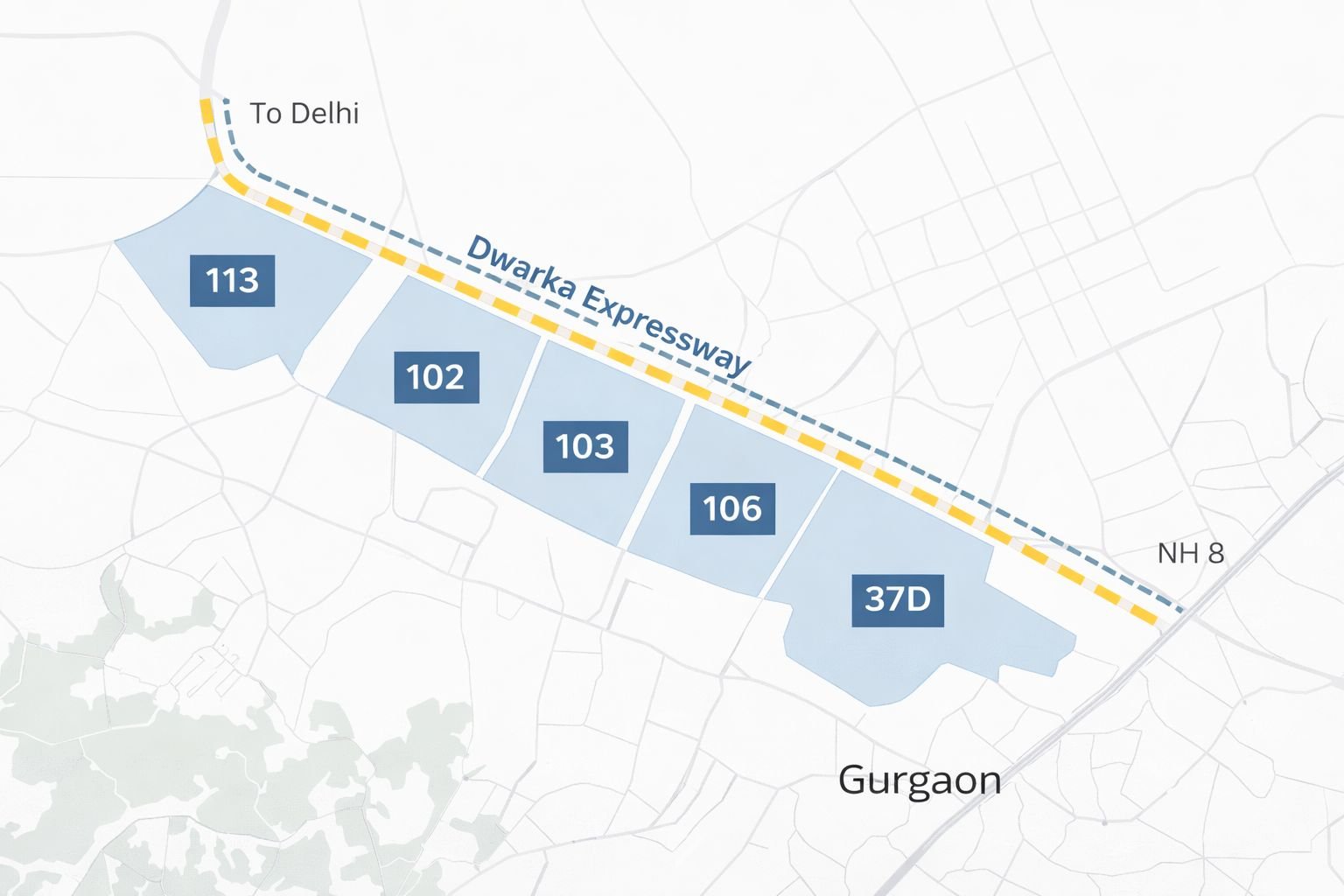
By this stage, most buyers have already understood that Dwarka Expressway is growing. The real confusion is not whether to invest, but where exactly to invest.
This is where a lot of people go wrong.
Not all sectors on Dwarka Expressway are performing equally. Some pockets are already seeing strong demand and faster price movement, while others are still dependent on future development.
If you’re entering the market in 2026, sector selection will have a much bigger impact on your returns than timing alone.
Sectors That Are Driving Maximum Demand
Most serious buying activity today is concentrated in a few key sectors where connectivity, project quality, and livability align well.
Sectors like 102 and 103 are seeing strong traction primarily because of their proximity to the Delhi side. This makes them attractive not just for investors but also for end-users who want easier access to Dwarka and the airport.
Sector 106 is emerging as a premium cluster, with larger developments and higher ticket sizes. Buyers here are typically looking at longer-term appreciation and are less price-sensitive.
Sector 113 has been gaining attention for its location advantage near Dwarka, making it a strong candidate for long-term growth as infrastructure around it continues to improve.
Then there are pockets like Sector 37D, which still offer relatively lower entry prices. These areas are being considered by buyers who are willing to wait a bit longer for full ecosystem development.
Best Sectors to Buy Based on Your Budget
Instead of looking at the entire corridor, it helps to narrow down based on budget and intent.
- Buyers under ₹2 Cr are typically exploring options in sectors like 102 or 37D, where entry pricing is still relatively accessible
- Between ₹2 Cr and ₹4 Cr, sectors like 103 and 106 offer a balance between premium positioning and growth potential
- Above ₹4 Cr, demand shifts toward high-end developments in sectors like 113 and premium clusters within 106
This segmentation reflects how most real buying decisions are happening on ground right now.
Where Buyers Are Getting It Wrong
One of the biggest mistakes buyers are making today is assuming that every new launch in the corridor will deliver similar returns.
That is no longer true.
Some projects are already priced aggressively, especially in the luxury segment, without offering clear differentiation in terms of layout, location, or brand value. Entering such projects at the wrong price can limit upside.
Similarly, projects that are slightly away from the main expressway or lack strong connectivity tend to see slower demand, even if pricing looks attractive at first.
A Simple Way to Evaluate Any Sector or Project
Instead of relying only on marketing or pricing, most experienced buyers are now evaluating opportunities using a few practical filters.
The first is connectivity — how easily the location connects to Delhi, major roads, and work hubs. The second is the developer’s track record, because execution risk still exists in this market. The third is how the surrounding area is shaping up in terms of infrastructure and livability.
When all three align, the chances of both appreciation and demand increase significantly.
What This Means for Your Investment Decision
If you’re entering Dwarka Expressway today, the opportunity is still there — but it’s no longer uniform across the corridor.
The market has reached a stage where selection matters more than timing.
Buyers who focus on the right sectors and projects are still seeing strong potential. Those who enter based on hype or incomplete information are more likely to face slower growth.
How Dwarka Expressway Compares to Other Gurgaon Markets
By the time most buyers reach this stage, they’re not just evaluating Dwarka Expressway in isolation. The real question usually becomes:
“Should I invest here, or consider other parts of Gurgaon?”
Two comparisons come up again and again — Golf Course Extension Road and New Gurgaon. Each market behaves very differently, and understanding that difference can help you make a much clearer decision.
Dwarka Expressway vs Golf Course Extension Road
| Factor | Dwarka Expressway | Golf Course Extension Road |
|---|---|---|
| Price Entry | Lower | Higher |
| Appreciation Potential | High | Moderate |
| Market Stage | Growth Phase | Mature Market |
| Investor Activity | Very High | Stable |
| Best For | Capital Appreciation | Stability & End-Use |
If your goal is long-term appreciation and you’re comfortable entering a growth-phase market, Dwarka Expressway still offers better upside. Golf Course Extension Road, on the other hand, works better for buyers who prefer a more established environment with less volatility.
Dwarka Expressway vs New Gurgaon
| Factor | Dwarka Expressway | New Gurgaon |
|---|---|---|
| Price Growth | High | Moderate |
| Stability | Medium | High |
| Rental Yield | Lower (2.5%–3.5%) | Higher (3%–4%) |
| Market Type | Investor Driven | End-User Driven |
| Best For | Growth & Appreciation | Rental & Stability |
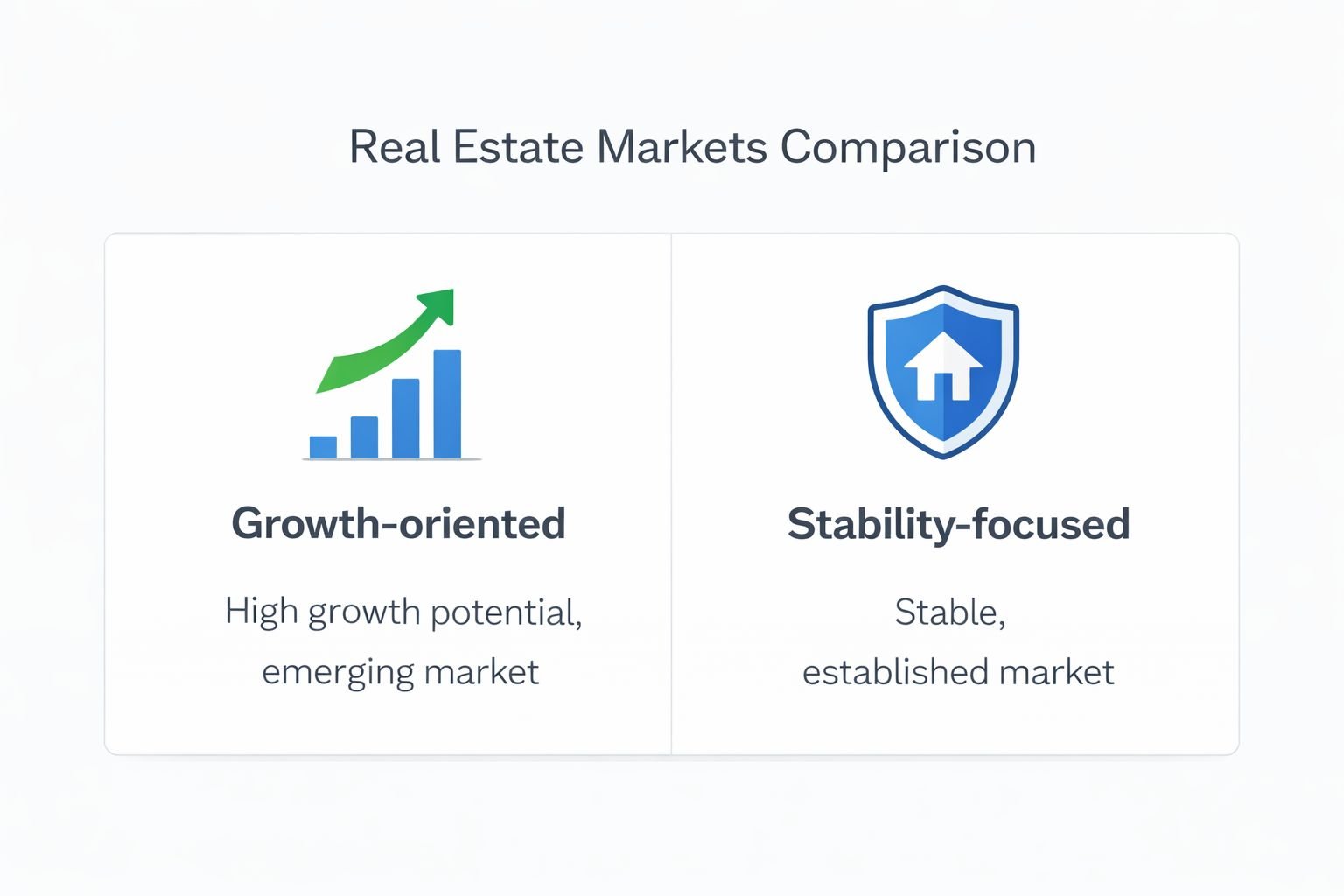
A lot of buyers find themselves choosing between these two. The simplest way to think about it is this: New Gurgaon offers stability and consistent rental income, while Dwarka Expressway is still a growth-driven market with stronger appreciation potential.
What This Comparison Means for Your Decision
There isn’t a single “better” option — it depends entirely on what you’re looking for.
If your focus is capital growth over the next few years, Dwarka Expressway stands out. If you’re prioritizing rental income and a more stable environment, areas like New Gurgaon may feel more comfortable.
Most experienced buyers don’t choose randomly between these markets. They align their decision with their goal — growth, stability, or a mix of both.
What Rental Income Actually Looks Like on Dwarka Expressway
One of the most common questions buyers ask is whether they can rely on rental income here.
The honest answer is that rental demand is improving, but it still hasn’t caught up with the pace at which prices have increased.
In most projects today, rental yields typically fall in the 2.5% to 3.5% range, depending on the sector, project quality, and how close the development is to key connectivity points.
In practical terms, a 3 BHK apartment in a well-located project may generate a monthly rent in the range of ₹35,000 to ₹70,000, but this varies widely based on furnishing, amenities, and occupancy levels.
What matters more than the exact number is the pattern. This is still primarily a capital appreciation market, not a rental-driven one.
How to Think About ROI in This Market
If you’re evaluating Dwarka Expressway purely from a rental yield perspective, it may not feel very attractive compared to more established parts of Gurgaon.
However, most investors entering this corridor are not doing so for rental income alone.
The focus is on overall return, which includes:
- Capital appreciation over 3 to 5 years
- Gradual improvement in rental demand as occupancy increases
- Long-term value as infrastructure fully matures
This is why many buyers are comfortable accepting lower rental yields in the short term, as long as the long-term growth story remains intact.
Why Builder Reputation Matters More Than Ever
As the market matures, one factor is becoming increasingly important — trust in the developer.
With multiple new launches across the corridor, buyers are becoming more selective about where they put their money. Projects from developers with a strong delivery track record are seeing faster absorption, even at higher price points.
Names like Central Park, AIPL, Sobha, Smartworld, and Godrej are attracting more attention largely because buyers feel more confident about execution and long-term quality.
This doesn’t mean smaller developers should be ignored, but it does mean that risk assessment is now a key part of the decision-making process.
Where Buyers Need to Be Careful
Even in a strong market, not every opportunity works equally well.
One area where caution is needed is in projects that are aggressively priced without offering clear differentiation. In some cases, pricing is being pushed up purely on market sentiment rather than actual value.
Another risk lies in projects that are slightly removed from the main expressway or lack strong surrounding infrastructure. These may look attractive from a pricing standpoint but can see slower demand and weaker resale performance.
Execution risk still exists as well. While many developers are delivering on time, delays are not entirely uncommon, which is why past track record should always be checked.
A Practical Way to Reduce Risk
Most experienced buyers today are not relying on a single factor when making decisions.
Instead, they are evaluating a combination of:
- Location within the corridor
- Developer credibility
- Pricing relative to nearby projects
- Expected livability once the project is complete
When these factors align, the probability of both appreciation and demand improves significantly.
What This Means for You as an Investor
If you’re entering Dwarka Expressway in 2026, it’s important to approach the market with the right expectations.
This is not a short-term flip market, and rental income alone may not justify the investment in the early years. However, for buyers with a medium to long-term horizon, the combination of ongoing infrastructure development, strong demand, and limited land supply still creates a compelling case.
The key difference now is that success in this market depends less on being early and more on making informed, selective decisions.
What the Next Few Years Could Look Like (2026–2030)
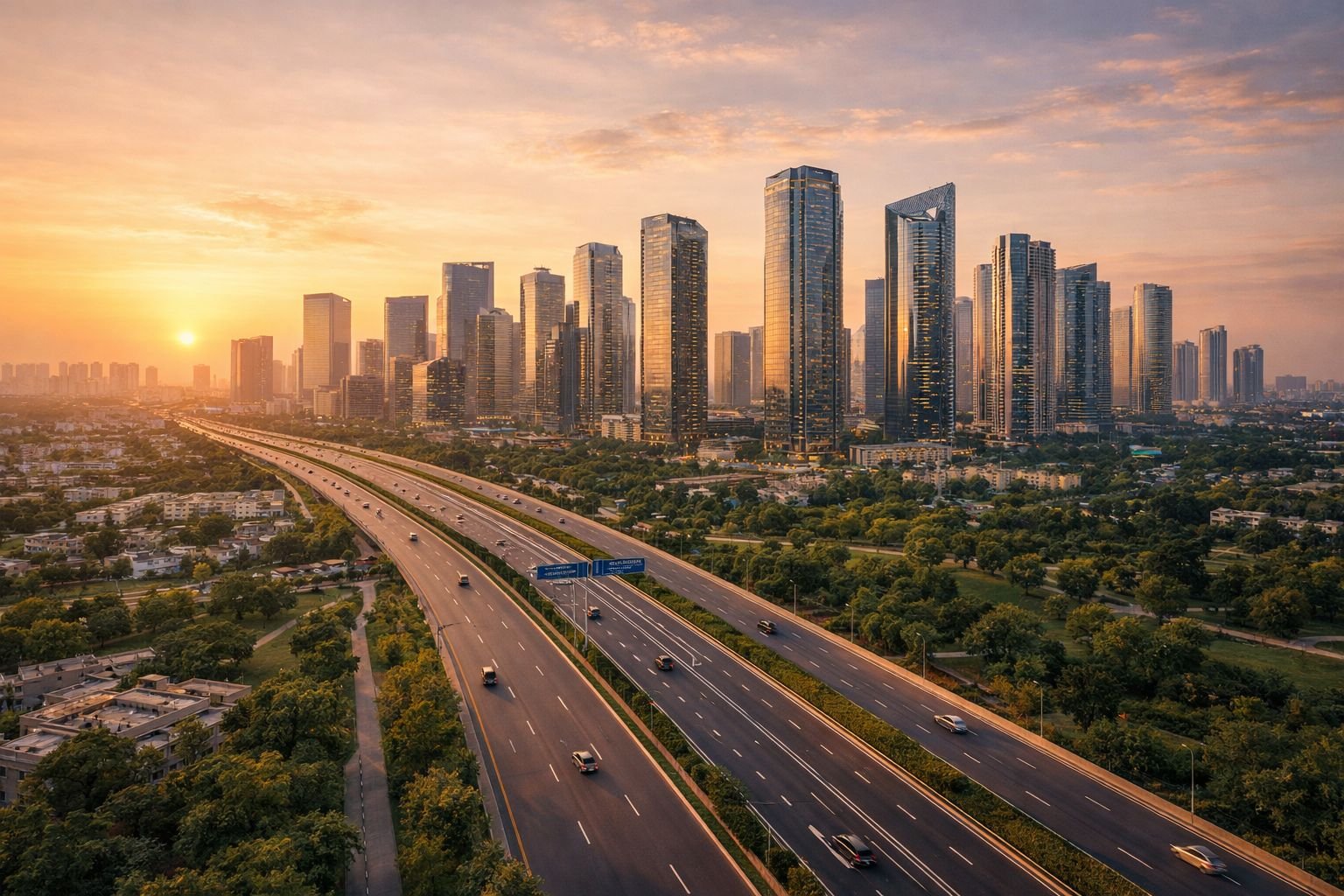
Dwarka Expressway has already gone through its early growth phase, but the story is far from over.
Over the next few years, the market is expected to move toward more stability, with price growth continuing at a steadier pace rather than the sharp jumps seen earlier. As more projects move toward completion and occupancy increases, the area will start functioning more like a fully developed residential ecosystem rather than a high-potential corridor.
This shift usually brings two things. First, rental demand improves as more people start living in the area. Second, price growth becomes more selective, with better-performing sectors and projects continuing to appreciate while average developments slow down.
In simple terms, the market is moving from broad growth to quality-driven growth.
Is Dwarka Expressway Still Worth Investing In?
Yes — but for the right reasons.
If you’re expecting the kind of rapid gains that early investors saw a few years ago, that phase has already passed. But if your focus is on medium-term appreciation, supported by improving infrastructure and strong demand, the opportunity is still very much alive.
What has changed is the margin for error.
Earlier, almost any entry could work. Today, the difference between a good investment and an average one depends on how well you choose your sector, project, and entry price.
A Simple Way to Decide
If you’re still unsure, it helps to simplify the decision.
Dwarka Expressway works best for buyers who are comfortable holding for a few years and are primarily looking for capital appreciation. It also makes sense for end-users who are planning ahead and want to enter before the area becomes fully saturated.
On the other hand, if your priority is immediate rental income or a completely stable, fully developed environment, you may find other parts of Gurgaon more suitable.
Final Thought
Dwarka Expressway is no longer an emerging market — it’s becoming one of the core growth corridors of Gurgaon.
The opportunity is still there, but it’s no longer about being early. It’s about being selective.
Buyers who approach this market with clarity, patience, and proper evaluation are still finding strong value. Those who rely only on hype or incomplete information are more likely to miss the real opportunity.
Looking to Explore Projects on Dwarka Expressway?
If you’re actively evaluating options, the next step should be to look at real projects, compare pricing, and understand what fits your budget and goals.
Explore verified projects, latest price trends, and available options here: Projects on Dwarka Expressway
Frequently Asked Questions
Is Dwarka Expressway still a good investment in 2026?
Yes, Dwarka Expressway is still a strong investment in 2026, especially for buyers with a 3–5 year horizon. While early-stage gains are over, the market continues to grow due to infrastructure progress, rising demand, and limited supply in key sectors.
What is the current property price on Dwarka Expressway Gurgaon?
Dwarka Expressway property prices in 2026 range from ₹8,500 to ₹18,000 per sq ft, depending on sector, builder, and project type. Premium developments in sectors like 106 and 113 are already at the higher end of this range.
Which sectors are best to buy property on Dwarka Expressway?
The best sectors on Dwarka Expressway currently include 102, 103, 106, and 113. These areas offer better connectivity, stronger demand, and higher appreciation potential compared to less developed pockets.
Is it better to buy a new launch or ready-to-move property here?
New launch projects are better for appreciation, while ready-to-move properties are better for immediate use and rental income. Most investors prefer new launches, whereas end-users usually choose near-possession homes for lower risk.
What kind of rental income can I expect on Dwarka Expressway?
Rental yield on Dwarka Expressway is typically between 2.5% and 3.5% annually. A 3 BHK apartment can earn around ₹35,000 to ₹70,000 per month depending on the project, location, and furnishing.
Is Dwarka Expressway better than New Gurgaon for investment?
Dwarka Expressway is better for capital appreciation, while New Gurgaon is better for rental income and stability. Investors usually choose Dwarka Expressway for growth, whereas New Gurgaon suits long-term, low-risk buyers.
Should I invest now or wait for prices to correct?
Buying now makes sense if you find a good project at a fair price, as major price corrections are unlikely in the short term. Waiting may lead to higher entry costs due to steady demand and ongoing price increases.


Join The Discussion