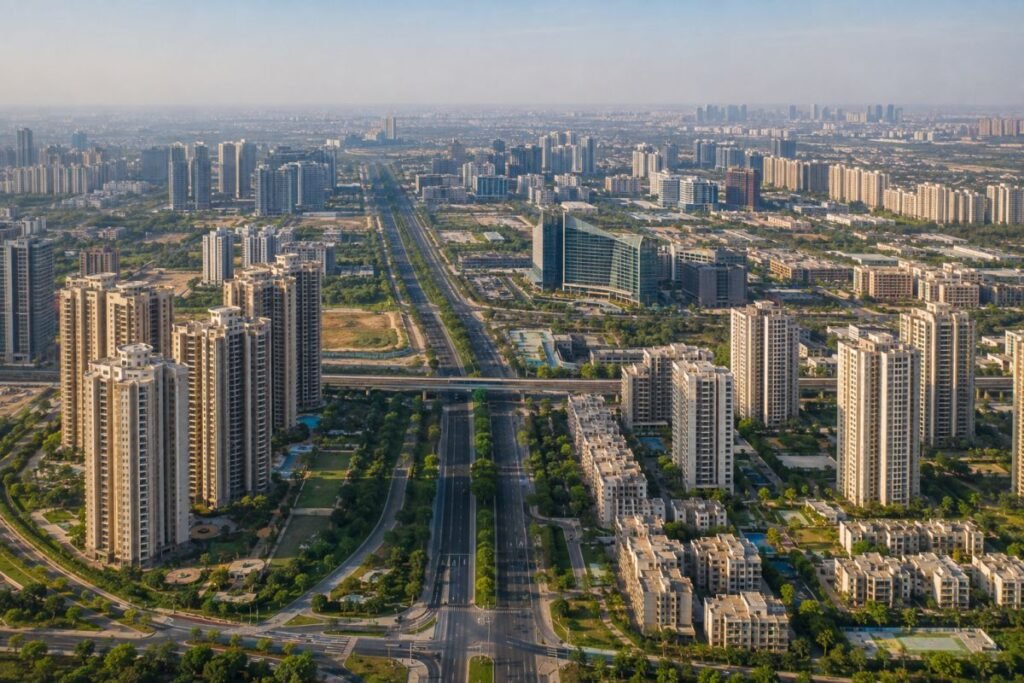
Gurugram’s real estate landscape has evolved from a sleepy suburb into India’s most dynamic property market. For anyone evaluating property in Gurugram today, the city can feel fragmented — over 80 sectors spread across multiple corridors, each with distinct price points, infrastructure maturity, and builder ecosystems. This guide maps every major residential corridor as it stands in 2026, giving you the spatial context to shortlist sectors with confidence.
Whether you are a first-time buyer or a portfolio investor, understanding how Gurugram sectors connect to employment hubs, the airport, and social infrastructure is the first step toward a sound decision. We have organised this map by corridor rather than sector number, because in Gurugram, a sector’s value is determined less by its digit and more by the road it sits on and the employment centres it feeds into.
How Gurugram Sectors Are Organized
Unlike older Indian cities that grew organically, Gurugram follows a planned grid. Sectors generally increase as you move south and west from the Delhi border. The Delhi-Jaipur highway (NH-48, formerly NH-8) acts as the city’s commercial and logistical spine, with most premium residential development clustered either along it or on roads that intersect it.
The city is best understood not by individual sector numbers but by corridors. Each corridor has a character: some are fully built out with established social infrastructure, while others are still emerging with lower entry prices and higher appreciation potential. The four corridors that dominate residential supply today are Dwarka Expressway in the north, Golf Course Extension Road in the centre-south, SPR and Sohna Road in the east-south, and the rapidly expanding new Gurugram belt west of the highway.
The Four Residential Corridors That Matter
Dwarka Expressway (North Gurugram)
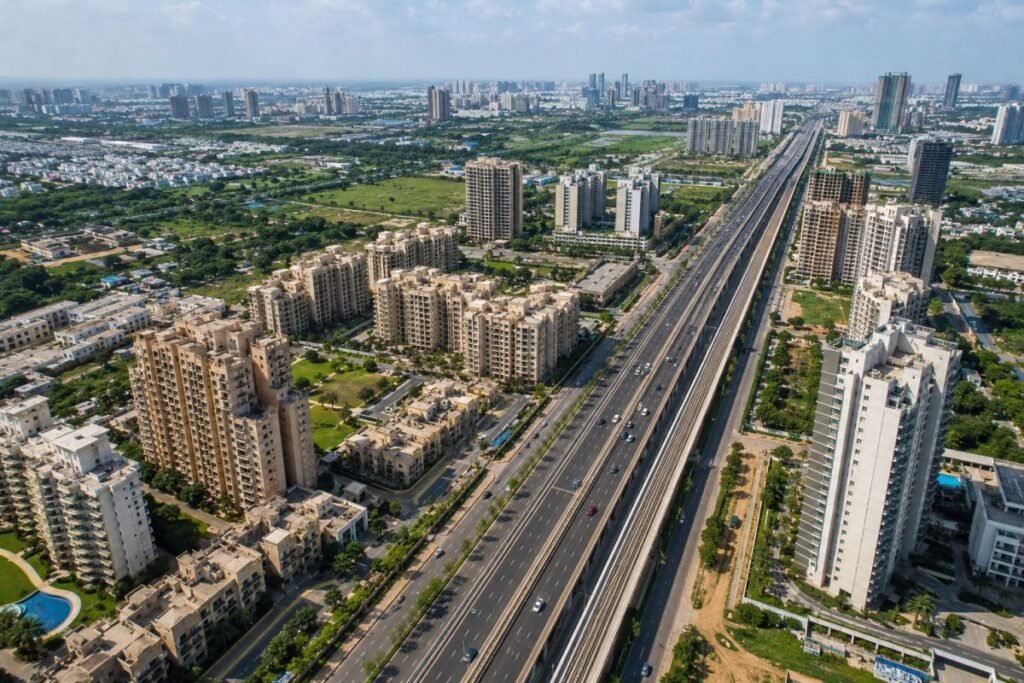
The Dwarka Expressway corridor — covering sectors roughly from 99 to 113 — has transformed from a long-promise infrastructure project into a functional reality. With the expressway now operational and seamless connectivity to IGI Airport [verify: exact travel time from Sector 109], this belt is attracting end-users who prioritise airport access and Delhi adjacency.
Key sectors here include 102, 109, and 111. The micro-market offers a mix of mid-segment apartments and a growing volume of luxury inventory from both national and regional developers. Social infrastructure is still catching up — premium schools and multi-speciality hospitals remain thinner here than on Golf Course Road — but the price arbitrage compared to central Gurugram makes it compelling for buyers with a 3–5 year holding horizon. Traffic bottlenecks at the Delhi-Gurugram border have eased but not disappeared entirely.
Golf Course Extension Road
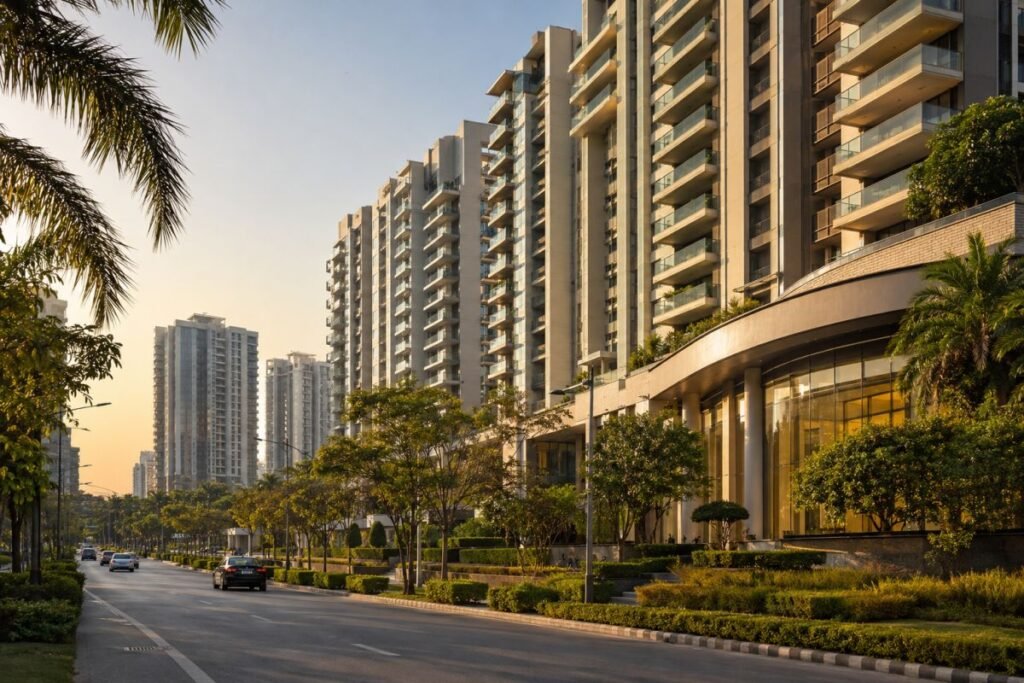
If Dwarka Expressway is the value play, the Golf Course Extension Road corridor is the established premium. Sectors 58–67 along this stretch represent the most mature luxury residential cluster in the city. With direct connectivity to Cyber Hub, Golf Course Road, and rapid metro access [verify: exact metro line and station names], this corridor commands the highest per-square-foot rates for ready property in Gurugram.
Developers here include DLF, M3M, and Emaar, with projects that set the benchmark for design and amenity standards. The trade-off is density: traffic congestion during peak hours is a genuine constraint, and new supply is limited mostly to high-rise towers on compact plots. For buyers seeking immediate rental yield, corporate tenancies, and capital preservation, this corridor remains the default choice despite the ticket size.
Southern Peripheral Road (SPR) and Sohna Road
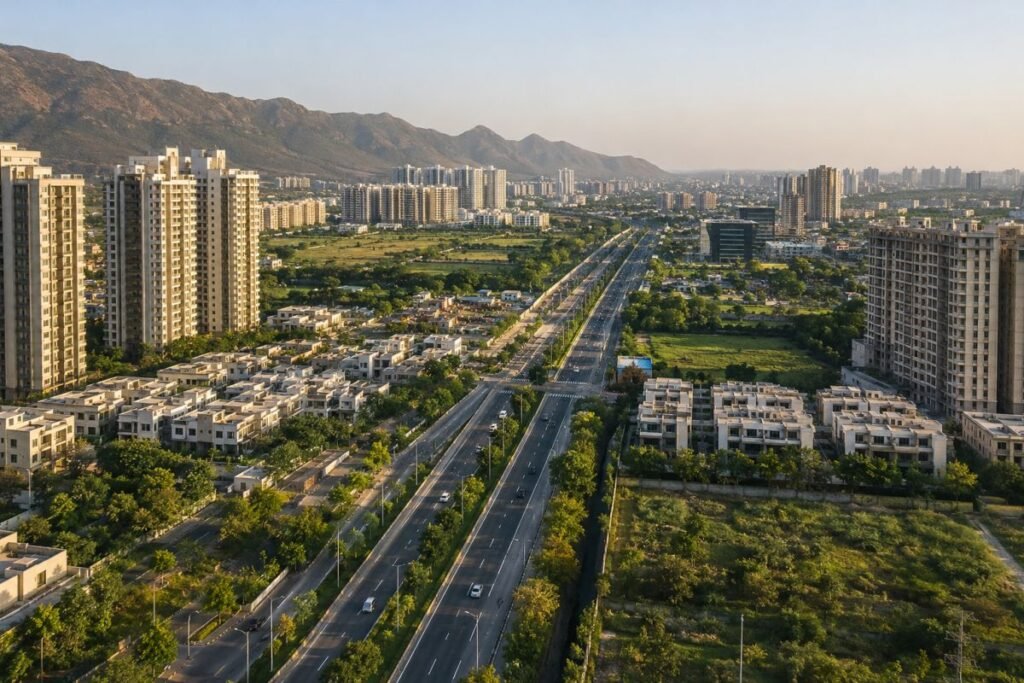
SPR — running parallel to NH-48 on the eastern side — has emerged as the corridor for organised mid-housing and plotted development. Sectors 69, 70, 71, and the broader Southern Peripheral Road belt offer larger land parcels, lower FARs, and a quieter residential environment than the city centre. The corridor feeds directly into the Sohna Road ecosystem.
Sohna Road extends this narrative southward toward the foothills of the Aravallis. While commute times to Delhi and Cyber City are longer, the corridor benefits from the KMP Expressway linkage and the proposed metro extension [verify: exact DPR status and proposed stations]. Entry prices here are roughly 30–40% below Golf Course Extension Road, making SPR attractive for buyers who prioritise living space and long-term appreciation over daily commute convenience.
New Gurugram (Sector 81–95+)
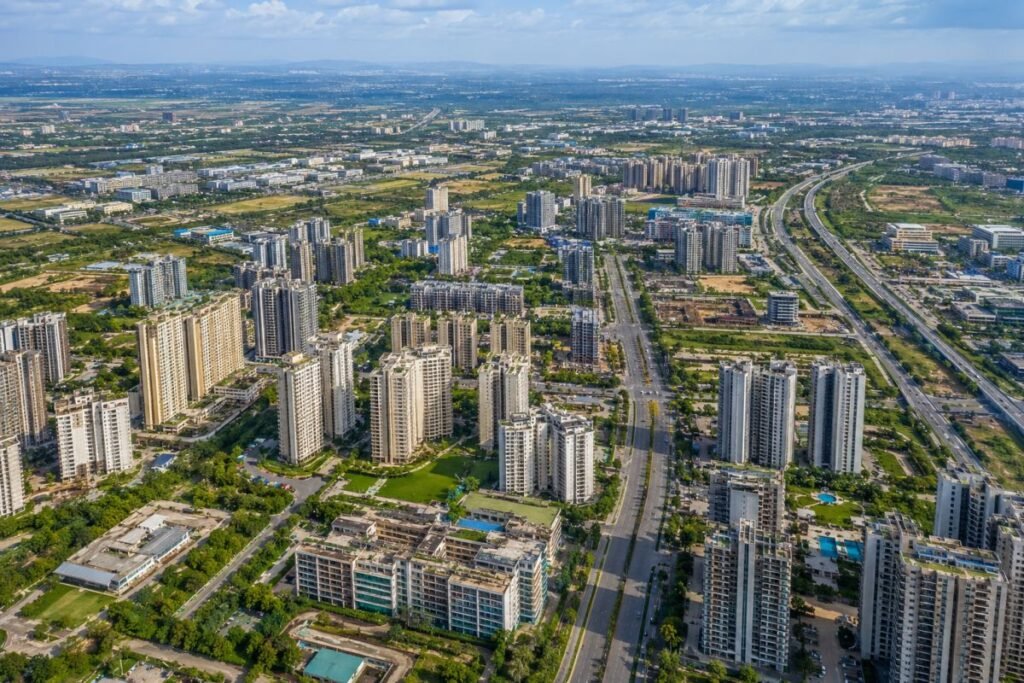
The term new Gurugram generally refers to the sectors west of NH-48, anchored by the IMT Manesar industrial belt and the emerging commercial hub around Sector 88–90. This is the city’s manufacturing and logistics backyard, but it is increasingly residential as well, driven by the IT and automotive workforce seeking housing closer to employment.
Sector 81, 84, 86, and 90 have seen concentrated launches from mid-market and affordable-luxury developers. The draw is straightforward: larger apartments at lower ticket sizes, with NH-48 providing reasonable connectivity to Delhi and the airport. The risk is infrastructure lag — municipal water, power backup reliability, and organised retail ecosystems are still developing. Buyers here should verify Haryana RERA registration [verify: specific RERA portal URL] and builder delivery track records carefully before committing.
Property in Gurugram: Price Benchmarks by Corridor
A quick comparison of average capital values for ready inventory (approximate, based on recent transaction data):
Table
| Corridor | Avg. Price (psf) | Profile | Best For |
|---|---|---|---|
| Golf Course Extension Road | ₹14,000–18,000 psf | Luxury, 3–4 BHK | End-use, rental yield |
| Dwarka Expressway | ₹7,000–11,000 psf | Mid-luxury, 2–3 BHK | Airport proximity, capital growth |
| SPR / Sohna Road | ₹15,000–20,000 psf | Mid-segment, villas + flats | Space, long-term hold |
| New Gurugram | ₹7,000 to ₹11,000 per sq. ft | Affordable-luxury, 2–3 BHK | First-time buyers, IT workforce |

These figures are indicative. Actual pricing varies by builder, phase, and floor plate. Use this table as a directional filter before drilling down to specific Gurugram sectors.
Infrastructure Catalysts to Watch in 2026
Several projects will reshape corridor premiums over the next 24 months:
- Metro Expansion: The Haryana Mass Rapid Transport Corporation lines connecting Old Gurugram to new Gurugram sectors [verify: exact alignment and completion timeline] will reduce commute friction for SPR and west-of-highway residents.
- Dwarka Expressway Completion: With the final connectivity bottlenecks resolving, north Gurugram is likely to see a demand inflection from Delhi-based buyers who previously avoided the belt.
- Global City Project: The proposed 1,000-acre Global City near Sector 36 [verify: exact sector and current status] could reposition southern Gurugram as a new employment and residential anchor, drawing demand toward Sohna Road and SPR.
- RRTS and Regional Connectivity: The Delhi-Alwar RRTS corridor [verify: Gurugram station location and status] will add another layer of regional accessibility for southern sectors.
Choosing the Right Corridor for You
There is no universal “best” sector in Gurugram — only the best fit for your budget, commute tolerance, and investment timeline. If you need immediate rental income and liquidity, central corridors remain superior. If you can absorb construction risk for appreciation, Dwarka Expressway and new Gurugram offer better entry mathematics and larger unit sizes.
Before shortlisting, visit sectors at different times of day. Traffic patterns, water pressure, power reliability, and ambient noise vary block by block, and no brochure captures that ground reality. Speak to existing residents where possible.
Understanding property in Gurugram requires more than scanning price lists. It demands a corridor-level view of where infrastructure, employment, and lifestyle are converging. At AssetBulls, we track these micro-markets daily — from launch dynamics to resale velocity and builder risk metrics.
Explore sector-specific data, builder ratings, and live inventory on AssetBulls, or speak with our advisory team to narrow your shortlist with precision rather than speculation.
Frequently Asked Questions
Q: Which Gurugram sectors offer the best value for property in Gurugram?
A: For value-conscious buyers, Gurugram sectors along SPR and new Gurugram — such as 69–71 and 81–90 — offer larger units at lower per-square-foot rates than central corridors. Golf Course Extension Road sectors command a premium but deliver stronger rental yields. Match your choice to your holding period and commute needs.
Q: What is new Gurugram and how does it differ from old Gurugram?
A: New Gurugram generally refers to sectors west of NH-48, from Sector 81 onward toward Manesar. Unlike old Gurugram, which is fully built out and dense, new Gurugram offers newer inventory, lower density, and better affordability — though social infrastructure and water reliability are still maturing in several pockets.
Q: How do Gurugram sectors rank by price and infrastructure maturity?
A: By price, the hierarchy runs Golf Course Extension Road > Dwarka Expressway > SPR / Sohna Road > new Gurugram. By infrastructure maturity, the same order broadly holds, with central Gurugram sectors offering the most established schools, hospitals, and retail. Dwarka Expressway is closing the gap on connectivity, while new Gurugram remains a work in progress.
Q: Is new Gurugram better than SPR for long-term investment?
A: Both have merit, but the risk-reward profiles differ. New Gurugram offers lower entry prices and proximity to the IMT Manesar employment base, but infrastructure execution remains a variable. SPR benefits from stronger Delhi connectivity via Sohna Road and the KMP Expressway, with more visible social infrastructure. Investors should compare specific builder track records and RERA timelines.
Q: Which connectivity projects will reshape Gurugram sectors in 2026?
A: The Haryana metro expansion, final Dwarka Expressway integration, and the Delhi-Alwar RRTS are the three projects most likely to rerate Gurugram sectors. The metro will particularly benefit SPR and new Gurugram residents, while RRTS connectivity should boost southern corridor accessibility over the medium term.