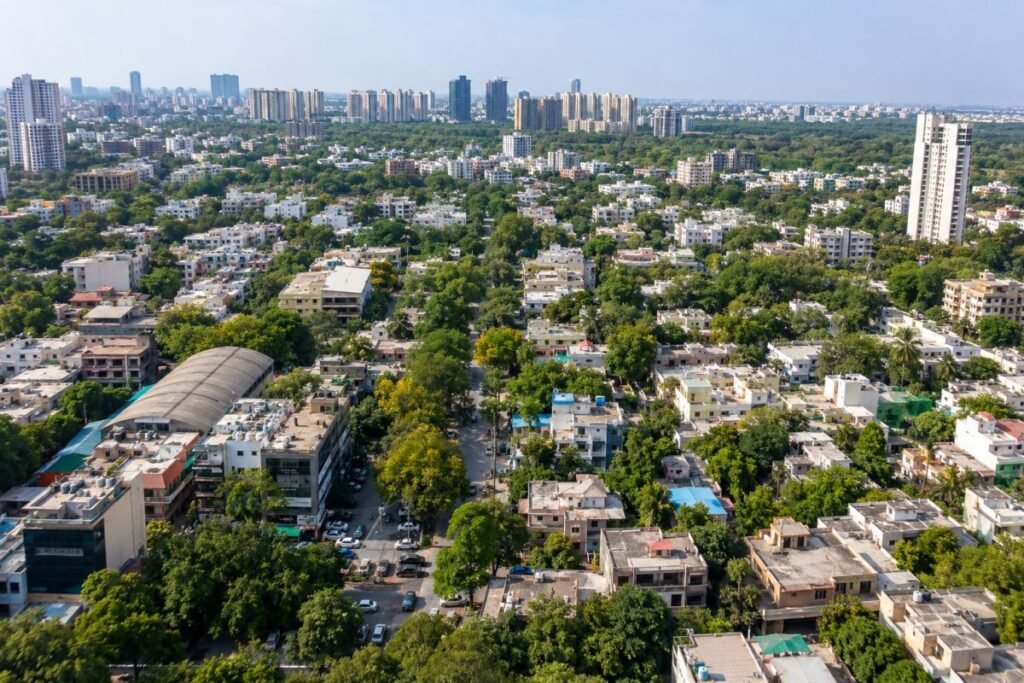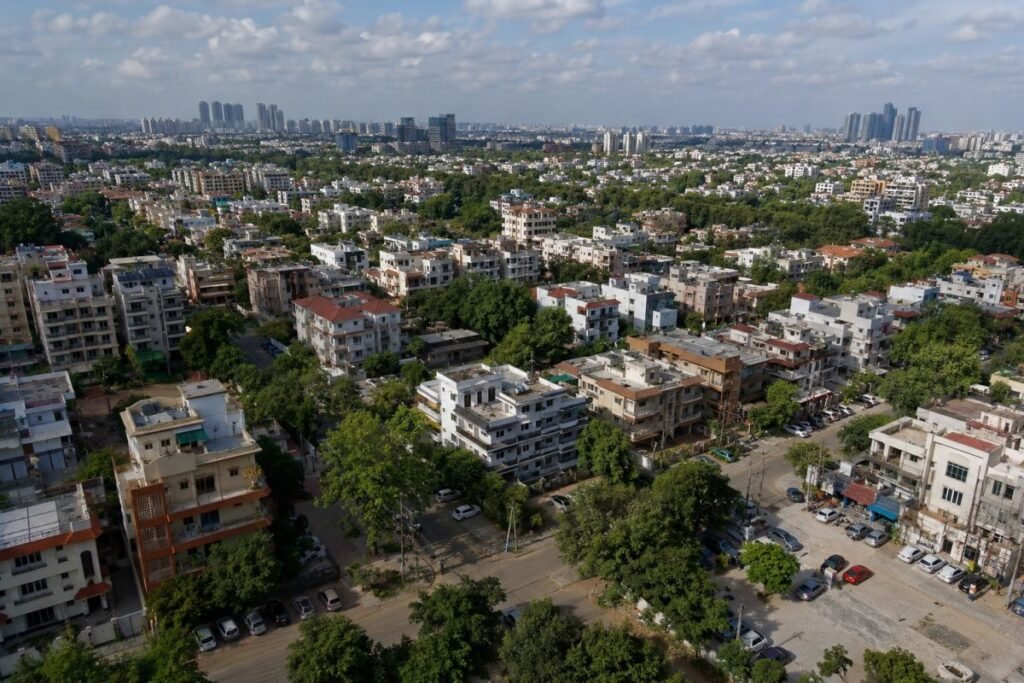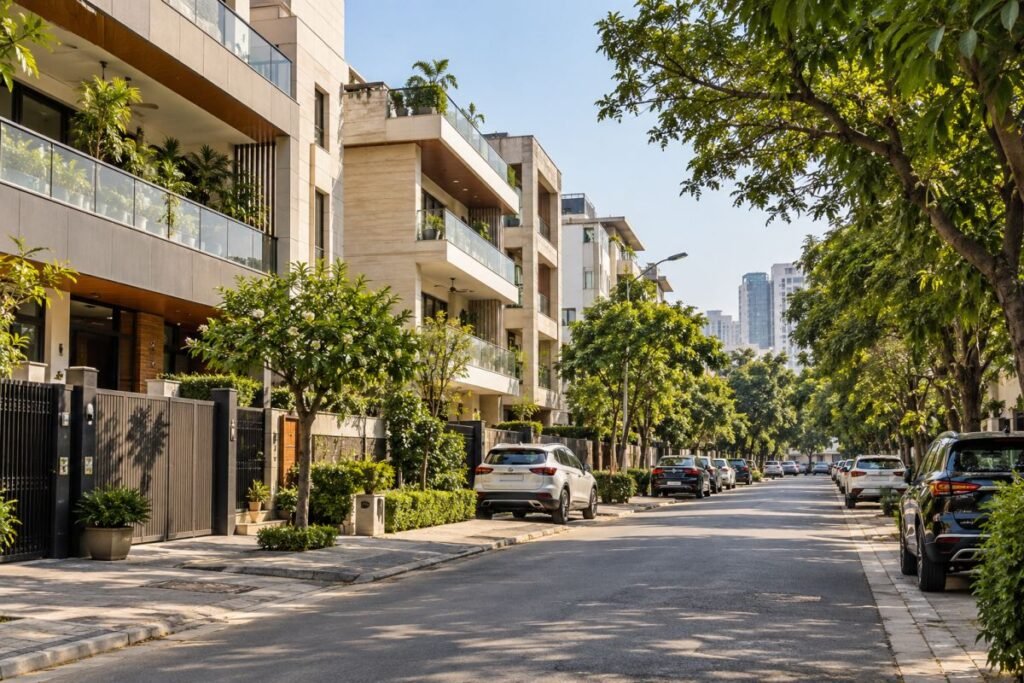
Properties in DLF Phase 3 offer a mix of independent builder floors, apartments, houses and residential options close to Gurugram’s established commercial districts. The locality is particularly relevant for homebuyers working around DLF Cyber City, Cyber Hub, Udyog Vihar and the NH-8 corridor who want to reduce daily commuting time without moving far from established urban infrastructure.
However, buying here requires more than comparing bedroom counts and asking prices. Property values can vary substantially by block, construction quality, plot characteristics, parking, road access and the legal status of the individual property. For buyers evaluating DLF Phase 3 Gurugram flats, the practical question is whether a specific property justifies its price relative to its location, condition and long-term usability.
This guide covers indicative prices, residential options, connectivity, investment considerations and essential checks before purchasing.
Why Consider Properties in DLF Phase 3?
DLF Phase 3 is an established residential locality in Gurugram, positioned near major employment centres and the Delhi–Gurugram urban corridor. Unlike newer peripheral developments, it offers access to an existing neighbourhood ecosystem, including local shops, everyday services and established transport connections.
Its principal advantages include:
- Employment access: Convenient for professionals working in Cyber City, Udyog Vihar and nearby commercial districts.
- Multiple property formats: Buyers can evaluate apartments, independent floors and houses depending on their budget and space requirements.
- Established neighbourhood: Daily necessities and local services are available within the wider surrounding area.
- Rental demand potential: Proximity to employment hubs can appeal to working professionals seeking accommodation nearby.
- Different micro-markets: Individual blocks offer different combinations of accessibility, street conditions, property size and residential character.
The main trade-off is that an established locality does not automatically mean every property is well maintained. Road width, parking arrangements, drainage, building maintenance and surrounding activity should be assessed at the individual-property level.
DLF Phase 3 Property Prices: What Should Buyers Expect?
The cost of properties in DLF Phase 3 depends on the property type, size, floor, building age, specifications and exact location. Independent floors are an important part of the market, while apartments and larger houses cater to different buyer profiles.
The following are indicative asking-price ranges based on residential listings available in October 2026. They are market reference points, not verified transaction values or guaranteed purchase prices.
| Property Type | Indicative Asking Price | Key Consideration |
|---|---|---|
| Compact 2 BHK apartments | Around ₹60 lakh and above | Verify carpet area, building condition and ownership |
| 3 BHK independent floors | Approximately ₹3 crore–₹3.7 crore | Compare usable area, specifications and parking |
| 4 BHK independent floors | Approximately ₹3.1 crore–₹4.7 crore | Check construction quality and floor-specific rights |
| Larger 5 BHK floors or houses | Approximately ₹6.9 crore–₹8 crore | Assess plot, built-up area and maintenance requirements |
| Premium apartments and larger residences | Can exceed ₹8 crore substantially | Compare amenities, area and the specific development |

These ranges are not uniform across the locality. Some smaller apartments may be considerably less expensive than premium independent floors, while exceptional houses and large apartments can command much higher asking prices. The upper end should not be treated as representative of a typical home.
What drives DLF Phase 3 property prices?
Four factors deserve particular attention.
1. Exact block and street: A property with convenient access to a metro station or major office hub may attract stronger interest, but a busy approach road can also introduce noise and congestion.
2. Construction and specifications: Lift access, power backup, waterproofing, ventilation, parking and the quality of electrical and plumbing installations affect both usability and future maintenance expenses.
3. Ownership and property rights: Buyers should establish whether the transaction concerns an apartment, an independent floor or a larger property with shared land and common areas. These are not legally interchangeable.
4. Total acquisition cost: Registration-related expenses, applicable stamp duty, brokerage, interiors, repairs and recurring maintenance can materially change the actual cost of ownership.
Before negotiating, compare at least three genuinely similar properties. Asking prices alone do not establish what a buyer should pay.
Property Types and Residential Options in DLF Phase 3
1. Independent builder floors
Independent floors are among the most relevant options for buyers searching for larger homes in DLF Phase 3. They can provide separate living spaces, multiple bedrooms and a more independent residential experience than a conventional apartment.
Before purchasing, verify the sanctioned building plan, floor ownership, parking allocation, lift arrangements, terrace rights and common-area responsibilities. A newly constructed floor should not automatically command a premium unless its specifications, legal documentation and construction quality justify the difference.
2. Apartments and compact flats
Apartments may suit smaller households, first-time buyers with a defined budget and investors targeting tenants who prioritise proximity to employment hubs.
However, not every listing described as a flat represents the same type of development. Check the actual carpet area, monthly maintenance, building facilities and whether the property belongs to a registered residential project or a different ownership structure.
3. Independent houses and larger residences
Larger houses can appeal to families seeking more privacy, additional rooms or potential redevelopment value. These purchases require closer examination of the underlying plot, title history, permitted construction and existing building condition.
Buyers interested in redevelopment should establish what is legally permissible rather than assuming that the entire plot can be rebuilt or expanded.
Connectivity: Cyber City, Metro and NH-8
Connectivity is a major reason buyers consider DLF Phase 3. The locality sits near Gurugram’s established commercial areas, making it particularly relevant for professionals whose daily routines revolve around office districts rather than newer residential corridors.

Important connectivity considerations include:
- DLF Cyber City and Cyber Hub: Nearby employment, dining and commercial destinations.
- Udyog Vihar: Relevant for professionals working across the established industrial and office district.
- NH-8: Provides road connectivity towards Delhi and other parts of the National Capital Region.
- Metro connectivity: Guru Dronacharya, Sikanderpur and the wider Rapid Metro network serve different parts of the surrounding area. Actual walking and driving distances depend on the property’s block and access route.
- IGI Airport: The airport is accessible by road, although travel time varies with traffic, route choice and departure time.
The wider Gurugram transport network is also evolving, but buyers should distinguish between operational infrastructure and proposed or under-development projects. A property’s purchase decision should not depend on an unconfirmed future connectivity benefit.
For a realistic assessment, test the commute during weekday peak hours and again outside those hours. A short distance on a map does not necessarily translate into a predictable journey.
DLF Phase 3 vs Other Gurugram Locations
DLF Phase 3 competes with several established and emerging residential markets. The right comparison depends on whether the buyer prioritises an office commute, larger living space, newer infrastructure or a different investment horizon.

| Location | Main Advantage | Potential Limitation | Best Suited For |
|---|---|---|---|
| DLF Phase 3 | Proximity to established office hubs | Variable street conditions and property quality | Office commuters and established-location buyers |
| DLF Phase 2 | Access to Cyber City and established residential pockets | Premium pricing for desirable properties | Professionals and families |
| Golf Course Extension Road | Contemporary residential developments and varied apartment choices | Project-specific commute and maintenance costs | Buyers seeking planned residential communities |
| Dwarka Expressway | Access to a developing residential and transport corridor | Construction activity and infrastructure timing can vary | Buyers evaluating longer-term urban growth |
Buyers comparing newer developments can also explore , provided the comparison is based on actual budgets, property types and commute requirements rather than headline appreciation claims.
The decision is not simply old versus new. DLF Phase 3 may offer a more convenient established location for one household, while a newer residential development may provide better amenities or a more suitable layout for another.
Is DLF Phase 3 a Good Property Investment?
DLF Phase 3 can be worth evaluating for both rental-oriented investors and long-term residential buyers. Its proximity to employment hubs supports a practical rental-demand thesis, but location alone cannot establish the investment return.
Rental income potential
Properties close to Cyber City and Udyog Vihar may appeal to professionals seeking shorter commutes. Smaller, well-maintained apartments and appropriately priced independent floors can attract different tenant segments.
Before buying for rental income, estimate:
- Realistic monthly rent based on comparable properties.
- Annual maintenance, repairs and property-management expenses.
- Expected vacancy between tenancies.
- Brokerage and tenant turnover costs.
- Taxes and other applicable ownership expenses.
Calculate gross rental yield using annual rent divided by the total acquisition cost, then separately estimate net yield after recurring expenses. Do not base the purchase decision on an advertised rent that has not been tested against actual demand.
Capital appreciation potential
An established location can benefit from sustained housing demand, improved infrastructure and limited availability of desirable properties. Nevertheless, appreciation is not guaranteed, and individual properties can perform differently.
A well-maintained home with clear title and practical access may have stronger resale appeal than a superficially cheaper property with legal complications, poor construction or difficult parking.
Investment verdict: DLF Phase 3 is worth shortlisting when the property offers a credible combination of location, legal clarity, rental suitability and purchase price. Investors should not assume that a high asking price or a premium locality automatically produces a superior return.
Essential Legal and Technical Checks Before Buying
Property due diligence is particularly important when purchasing independent floors, older houses or properties with shared land and common facilities.
Use the following checklist before paying a substantial booking amount:
- Title verification: Have a property lawyer examine the ownership chain, conveyance documents and applicable encumbrance records.
- Building approvals: Check the sanctioned building plan, applicable permissions and deviations from approved construction.
- RERA applicability: Identify the exact project and promoter, then verify registration and project details where applicable. Do not assume that every resale property or independent floor has the same RERA status.
- Floor and land rights: Confirm what is included in the sale deed and how common areas, parking and other shared facilities are documented.
- Physical inspection: Check seepage, structural condition, electrical systems, plumbing, ventilation, lift operation and power backup.
- Outstanding dues: Review applicable maintenance charges, utility bills, property-tax records and other liabilities.
- Transaction costs: Budget for applicable stamp duty, registration, brokerage, legal review, repairs and interiors.
- Neighbourhood inspection: Visit the property at different times to assess traffic, noise, parking and access.
For a new or under-construction project, verify the exact registered project and its applicable completion or possession commitments. A registration associated with a similarly named development should not be treated as proof for every property in DLF Phase 3.
Who Should Buy Property in DLF Phase 3?
The locality is most relevant to buyers whose requirements align with its established location and diverse residential stock.

Consider buying if you:
- Work in or regularly commute to Cyber City, Udyog Vihar or nearby business districts.
- Want an independent floor or house rather than a conventional apartment.
- Prefer an established neighbourhood with existing local services.
- Can evaluate individual properties carefully and budget for maintenance.
Consider alternatives if you:
- Require extensive clubhouse facilities and a standardised gated-community experience.
- Need a property within a tightly constrained budget but want a larger home.
- Prefer a newer development with clearly defined shared amenities.
- Are investing solely on the expectation of rapid appreciation.
The strongest purchase is not necessarily the most expensive or newly constructed property. It is the one whose legal status, location, condition and total cost match the buyer’s actual requirements.
Final Verdict: Should You Explore Properties in DLF Phase 3?
Properties in DLF Phase 3 deserve consideration for buyers who value proximity to Gurugram’s established commercial districts and want a choice of apartments, independent floors and houses.
The locality’s key strength is convenience. Its main challenge is property-level variation: two homes with similar asking prices may differ significantly in construction quality, legal clarity, access, parking and long-term maintenance requirements.
Shortlist properties by block, compare genuinely similar homes and complete legal and technical due diligence before negotiating. Buyers can explore relevant residential listings on AssetBulls or speak with the advisory team to identify properties aligned with their budget, intended use and investment horizon.
FAQ SECTION
1. What is the price of property in DLF Phase 3, Gurugram?
Indicative asking prices vary by property type. Compact 2 BHK apartments may start around ₹60 lakh, while many 3 BHK and 4 BHK independent floors are advertised in the ₹3 crore–₹4.7 crore range. Larger houses and premium residences can cost substantially more. Actual prices depend on location, size, condition and legal status.
2. Are DLF Phase 3 Gurugram flats a good investment?
They can suit buyers seeking proximity to Cyber City, Udyog Vihar and other employment centres. Investment performance depends on the purchase price, achievable rent, vacancy, maintenance expenses and resale demand. Compare net rental yield and total acquisition costs before committing.
3. Is DLF Phase 3 better for buying a flat or an independent floor?
An apartment may suit buyers prioritising a compact layout and a conventional residential setup. An independent floor may provide more space and privacy, but requires careful checks of land rights, sanctioned construction, parking and shared facilities. The better option depends on budget and intended use.
4. Is DLF Phase 3 close to Cyber City and the metro?
Yes. DLF Phase 3 is near Cyber City and the wider metro-connected commercial district. However, the actual commute depends on the specific block, walking route, traffic conditions and access to the nearest operational station.
5. What should I check before buying a property in DLF Phase 3?
Verify the title, ownership chain, sanctioned building plan, applicable RERA status, floor and parking rights, outstanding dues and physical condition. Also compare similar properties and calculate the full acquisition cost, including registration-related expenses, brokerage and repairs.