

SPR is no longer being evaluated as an alternative location in Gurgaon.
It’s becoming one of the primary decision points for serious buyers.
This shift also reflects a broader change in the Gurgaon real estate market, where buyers are no longer evaluating locations in isolation but comparing multiple corridors side by side.
Over the last two to three years, buyer movement here has shifted noticeably. What used to be a corridor people considered after rejecting Golf Course Extension or Sohna Road is now being shortlisted directly—especially by buyers who are comparing value, not just location names.
Prices have already moved. New projects are entering at higher benchmarks. And in specific sectors, absorption is happening faster than most buyers expect.
That combination tells you one thing and most buyers don’t realise this shift until pricing has already moved.
At this stage, surface-level similarities don’t mean much—real performance differences are already starting to show beneath pricing.
What Has Actually Changed on SPR
For years, SPR stayed in that uncertain zone where infrastructure existed but confidence didn’t.
That gap between infrastructure and buyer confidence has now closed.
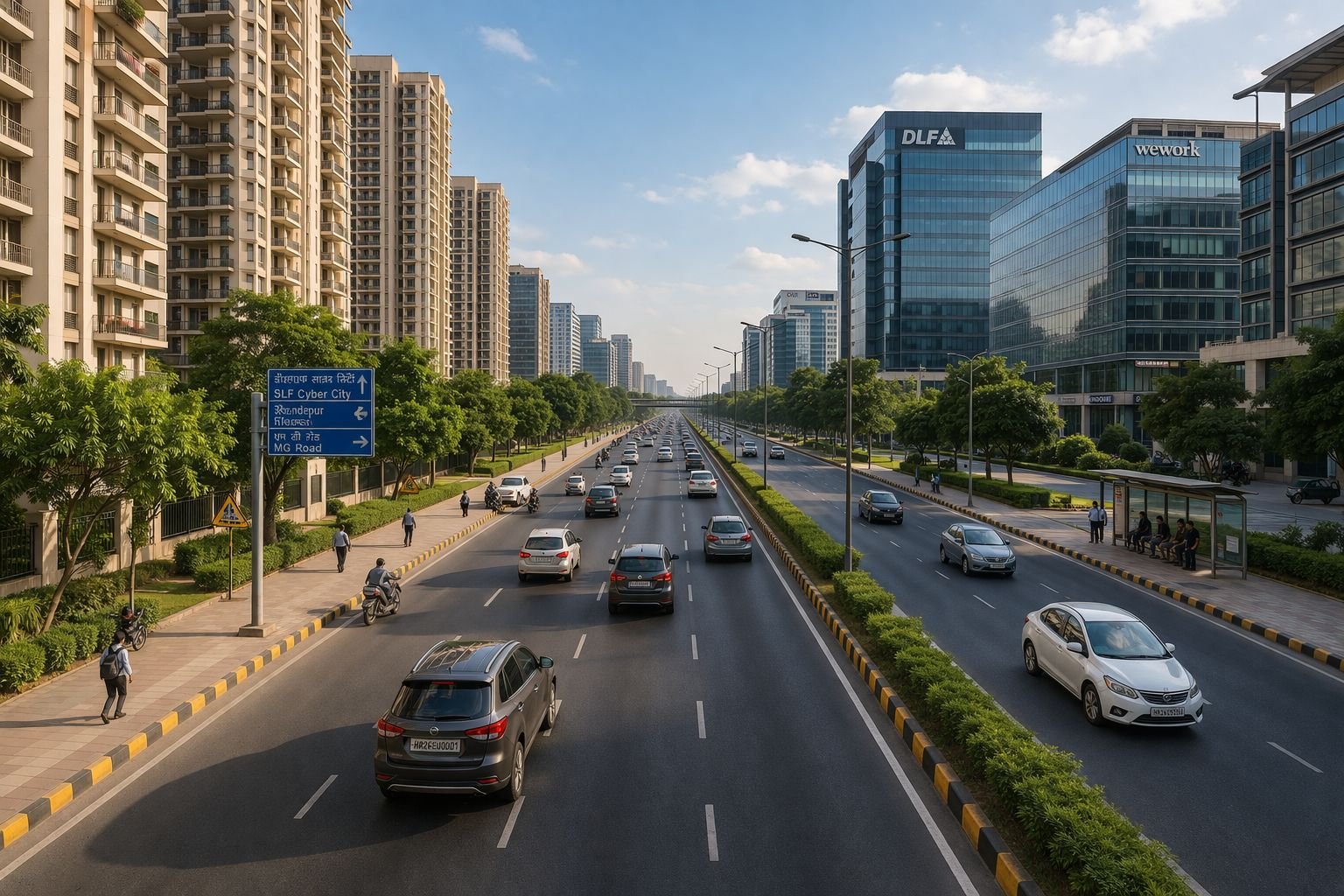
Today, the road is functional, connectivity is usable, and more importantly, residential development is no longer scattered—it’s forming clusters. This shift from isolated projects to a connected residential belt is what typically changes buyer behaviour.
People don’t just look at one project anymore. They evaluate the ecosystem around it.
And that’s already happening on SPR.
Why Buyers Are Moving Here Now

The movement toward SPR is not driven by a single factor.
It’s coming from a combination of pressure and opportunity.
On one side, pricing on Golf Course Extension has moved to a level where many buyers feel upside is limited relative to entry cost. On the other side, Dwarka Expressway has already delivered a significant part of its early gains, and entry points are no longer as comfortable as they once were.
Dwarka Expressway has already delivered a significant part of its early gains, and entry points are no longer as comfortable as they once were — something you can clearly see in the Dwarka Expressway property market trends.
SPR sits between these two.
In many ways, it overlaps with the evolving New Gurgaon property market, but with a different pricing and demand dynamic.
But the reason it’s getting traction is not just because it’s “in between.” It’s because it offers usable connectivity with relatively less pricing distortion—at least for now.
That distinction is exactly why pricing on SPR is behaving more rationally than some other corridors.
What’s Happening on Ground (Not in Listings)
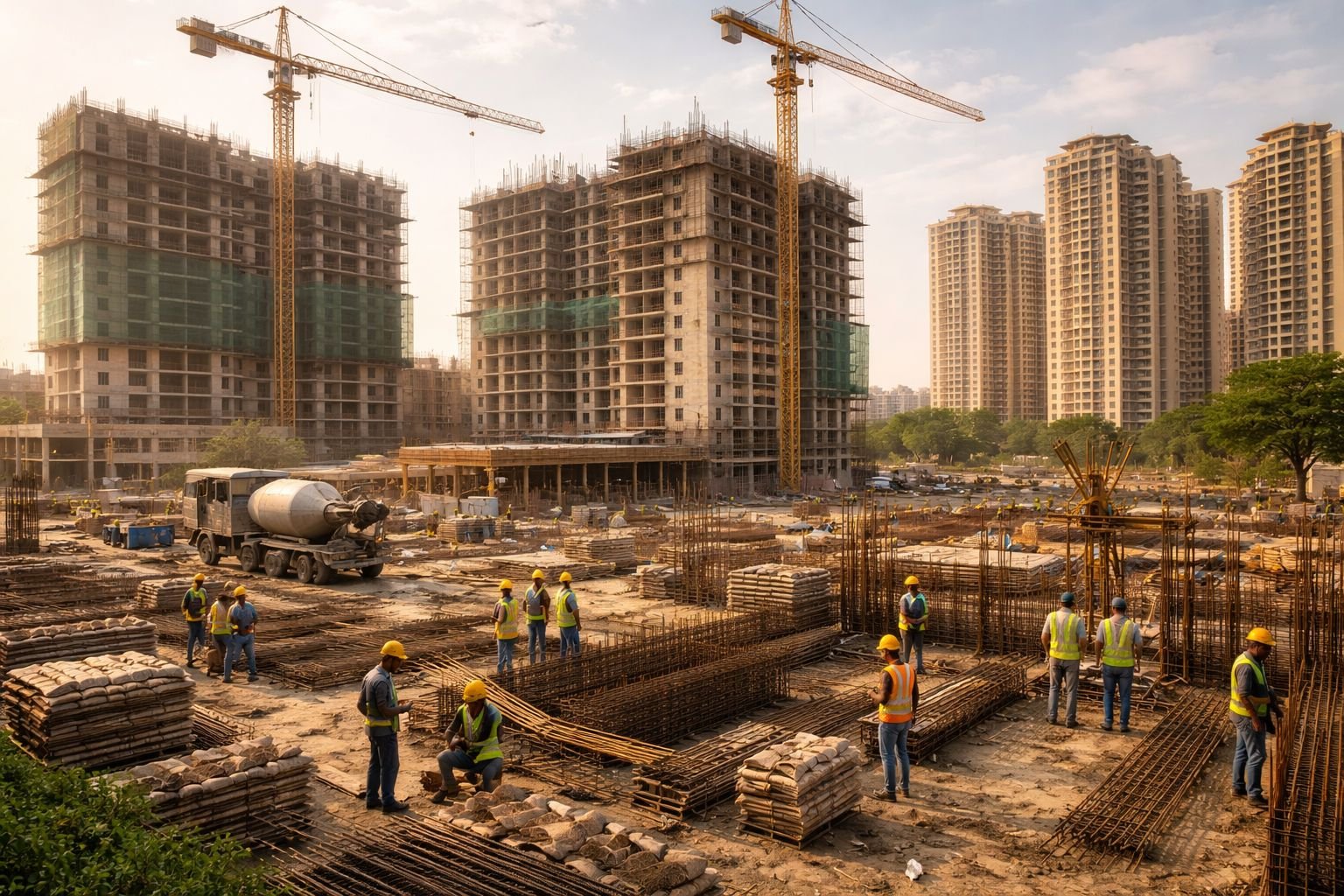
If you track actual deals instead of online listings, a pattern becomes visible.
In better-located projects:
- Initial inventory is getting absorbed without heavy discounting
- Developers are increasing prices in phases, not holding them flat
- Buyers are comparing multiple projects before committing
This shift toward comparison-based buying is what signals a maturing market.
The market is shifting from “entry-driven” to comparison-driven.
Buyers are no longer asking:
“What is the cheapest option?”
They are asking:
“What justifies the price I’m paying?”
That’s a sign of a market maturing.
A Shift Most Buyers Don’t Notice Early
Not all parts of SPR are moving at the same speed.
Some sectors are already seeing strong traction, while others are still dependent on future development around them. This divergence is subtle right now—but it will become more visible over the next couple of years.
And that’s where most buyers either gain or lose.
Because when a corridor transitions like this, Small differences in planning, positioning, and timing are now creating disproportionately large differences in returns.
What This Means If You’re Evaluating SPR Today
If you’re entering SPR in 2026, you’re entering at a stage where most easy gains are behind, but meaningful upside still depends on correct selection.
You’re entering at a stage where:
- Pricing has moved, but not evenly
- Demand exists, but not across all pockets
- Projects look similar, but won’t perform the same
At this stage, pricing gaps between similar-looking projects are widening—and that’s where your decision starts to matter.
What This Guide Will Help You Do
Instead of just listing projects or quoting price ranges, this guide is structured to help you make actual decisions.
You’ll understand:
- How prices have moved—and where they may still have room
- Which sectors are attracting real demand
- How to filter projects beyond branding
- Where buyers are overpaying without realising it
- What kind of returns are realistic—not theoretical
Because at this stage of the market, clarity matters more than speed.
How SPR Road Property Prices Have Moved (2022–2026)
If you look at SPR today and feel prices have already moved, you’re right.
But what matters is how they moved—because that tells you what happens next.
This hasn’t been a sudden spike driven by hype. Pricing on SPR has increased in layers, and each phase was triggered by something tangible—better connectivity, stronger launches, or visible demand.
That distinction explains why SPR has avoided the kind of sharp corrections seen in more speculative markets, because markets built on gradual movement behave very differently from those built on speculation.
In some cases, pricing has moved faster than the ecosystem—and that mismatch is where most buyers misjudge value.
What Prices Looked Like Before the Shift
Back in 2022, most projects on SPR were still priced conservatively.
The typical range was between ₹6,500 to ₹8,500 per sq ft, and even at those levels, buyer confidence was not very strong. The corridor was still seen as secondary, and demand was largely exploratory.
A lot of buyers were waiting.
Not for lower prices—but for clarity.
The Phase Where Confidence Started Building
By 2024, things started to change.
New launches entered the market at higher benchmarks, and more importantly, they started getting absorbed. This is usually the first real signal of a shift—when pricing moves up and buyers still enter.
At this stage, most projects were trading in the ₹8,500 to ₹11,500 per sq ft range.
This wasn’t aggressive growth. It was acceptance.
The market was beginning to recognise SPR as a viable residential corridor, not just a future bet.
Where Prices Stand Today (2026 Reality)
In 2026, pricing on SPR is no longer uniform.
Across active sectors, most projects are now in the range of ₹9,000 to ₹16,000+ per sq ft, but that range alone doesn’t tell you much.
Because within that band, there are clear differences:
- Some projects are priced based on actual demand and positioning
- Others are priced based on expectation
In fact, some projects are already priced as if the corridor is fully mature — and that’s where most buyers are overpaying today.
Price Movement Snapshot

| Year | Avg Price Range (₹/sq ft) | What Was Driving Prices |
|---|---|---|
| 2022 | ₹6,500 – ₹8,500 | Low confidence, early-stage positioning |
| 2024 | ₹8,500 – ₹11,500 | New launches + improving absorption |
| 2026 | ₹9,000 – ₹16,000+ | Active demand + premium positioning |
How Much Growth Has Already Happened
From 2022 to 2026, most parts of SPR have already seen 30% to 50% appreciation, depending on the sector and project quality.
That’s enough to make buyers cautious—but not enough to signal saturation.
Because the nature of this growth matters.
This wasn’t a sharp spike followed by stagnation. It was a gradual climb supported by actual activity.
Markets that grow through absorption rather than speculation tend to slow down gradually, not reverse suddenly.
A Pricing Pattern Worth Paying Attention To
One trend that is becoming clearer now is how developers are controlling price movement.
Instead of releasing full inventory, projects are being launched in phases. Each phase comes at a higher price, backed by absorption in earlier stages.
This creates a structured pricing ladder. By the time most buyers notice it, the better entry points are already gone.
And for buyers, it means one thing:
Waiting doesn’t always lead to better entry.
Where Buyers Are Misreading the Market
A common assumption right now is that SPR has already become expensive.
That’s only partially true.
What has actually happened is that:
- Strong projects have moved ahead
- Average projects are trying to catch up
When both get grouped under the same price band, it creates confusion.
Buyers end up comparing numbers instead of value.
What This Means for Entry Timing
Trying to time the lowest entry point is no longer as effective as identifying where pricing still reflects current reality rather than future assumptions.
That window has passed.
What matters now is:
- Whether the project is correctly priced for its location and planning
- Whether demand is already visible or still speculative
- Whether future supply in that micro-location is limited
In other words, timing is no longer about the market—it’s about the project.
A Practical Way to Read Current Prices
Instead of asking:
“Is SPR expensive now?”
The better question is:
“Which projects on SPR are still underpriced relative to what they offer?”
That shift in thinking is what separates average decisions from good ones.
What This Means Going Forward
SPR is moving into a phase where:
- Price differences between projects will increase
- Well-positioned developments will continue to move
- Others may stagnate despite similar pricing
That divergence has already started—it’s just not obvious to everyone yet.
Projects that look similar on paper are now being priced very differently—and that gap is where outcomes are decided.
Where It Actually Makes Sense to Buy on SPR (Sector-Level Breakdown)
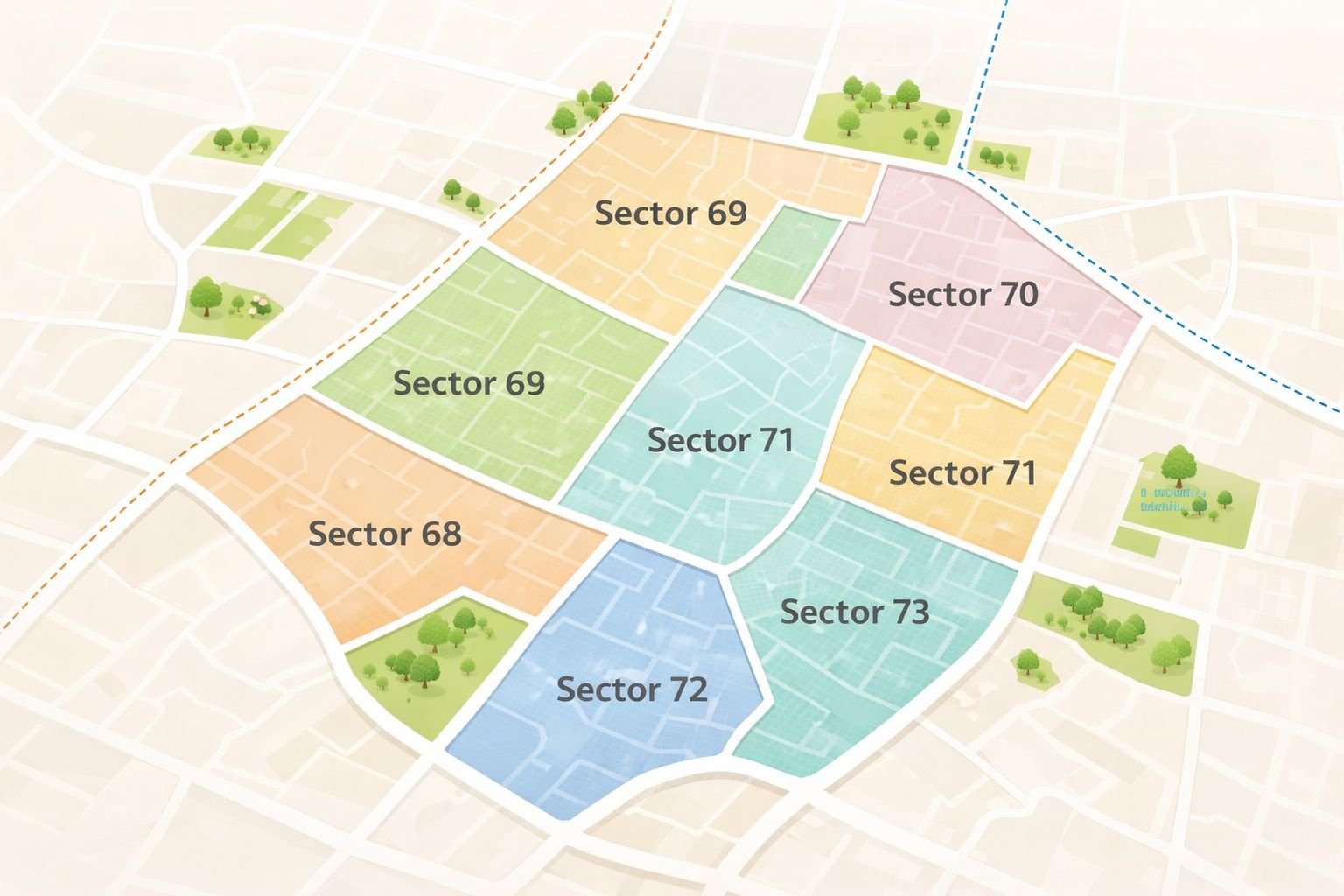
By now, you’ve seen how prices have moved.
But price alone doesn’t tell you where to invest.
Because on SPR, returns are no longer linked to the corridor as a whole. They are increasingly tied to specific sectors and even specific pockets within those sectors.
And that shift is already visible—if you know where to look.
Why Sector Selection Now Matters More Than Timing
A few years ago, entering early anywhere on SPR could work.
That’s no longer the case.
Today, two buyers entering at the same time—but in different sectors—can see very different outcomes over the next few years.
The reason is simple:
Demand is not spreading evenly. It is concentrating.
And once that concentration becomes visible, it tends to accelerate.
How to Read SPR Beyond a Map
Most buyers look at SPR as a straight stretch.
That’s not how the market behaves.
A more practical way to understand it is to divide it into three functional zones—based on how demand and development are actually playing out.
1. Sectors Where Demand Is Already Established
Sectors like 70 and 71, along with parts of 69, are currently seeing the most consistent traction.
What’s different here is not just connectivity—it’s activity.
There is visible residential movement, multiple projects competing within close proximity, and enough ecosystem development to support end-user decisions.
In these sectors, demand doesn’t need to be created. It already exists.
That usually leads to:
- Faster inventory movement
- More stable resale interest
- Less dependence on future triggers
The trade-off is pricing. Entry here is rarely the cheapest within SPR—but it is usually more predictable.
2. Sectors Where Positioning Is Improving Rapidly
Sectors like 72, 73, and 74 fall into a different category.
These are not fully mature yet, but they are attracting better-quality developments and larger-scale planning. This is where developers are trying to build the next layer of premium positioning on SPR.
Right now, demand here is building—not fully established.
That creates a narrow window where:
- Entry prices are still relatively aligned with current perception
- But future positioning may push them higher
This is where a lot of informed buyers are entering—but only after comparing projects closely.
Because in this zone, the difference between a well-positioned project and an average one is much sharper.
3. Sectors Where Pricing Looks Attractive (But Needs Caution)
Parts of Sector 68 and some pockets of 69 still offer relatively lower entry points.
On the surface, this looks like an opportunity.
But lower pricing here is not accidental—it reflects current demand levels.
These sectors are still developing in terms of:
- Surrounding infrastructure
- Occupancy
- Daily livability
This doesn’t mean they won’t grow.
It means the timeline is less certain.
For some buyers, this works. For others, it leads to longer holding periods than expected.
Sector Comparison Snapshot
| Zone | Key Sectors | What’s Happening | What to Expect |
|---|---|---|---|
| Established Demand | 70, 71 | Active buying + visible occupancy | Stable growth, better liquidity |
| Emerging Premium | 72, 73, 74 | New launches + positioning upgrade | Selective upside based on project |
| Value Entry | 68, parts of 69 | Lower pricing, slower traction | Longer hold, uneven growth |
A Pattern Most Buyers Realise Too Late
When a corridor starts maturing, growth doesn’t happen everywhere at once.
It clusters.
Once a few sectors start seeing strong demand, they pull more attention, more launches, and eventually more pricing power.
Other sectors take longer to catch up.
In some parts of SPR, pricing has already moved ahead of livability — and that gap doesn’t close quickly.
How to Think About Sector Selection Practically
Instead of asking:
“Which sector is cheapest?”
A better way to approach this is:
Where is demand already visible?
Where are multiple projects competing at similar levels?
Where would an end-user actually choose to live today, not just in the future?
These questions give you more clarity than price comparisons alone.
What This Means for Your Decision
SPR is no longer a single opportunity—it’s a set of micro-opportunities.
Some sectors are already delivering.
Some are building toward that phase.
Some are still early.
Your outcome depends on which one you choose.
Best Projects on SPR Gurgaon (How to Choose What Actually Works)

By this stage, most buyers have shortlisted sectors.
The mistake now is assuming that projects within those sectors will perform similarly.
They won’t.
On SPR, two projects with similar pricing can deliver very different results over the next few years. The difference usually comes down to how well the project is positioned—not how it is marketed.
What Is Actually Driving Demand Inside Projects
If you track real buying behaviour, one thing stands out:
Buyers are no longer reacting to launch buzz alone — they are evaluating how the project will function once occupied.
That shift changes what gets preference.
Projects seeing stronger traction tend to have:
- Clear layout efficiency (usable space, not just size)
- Manageable density (not overbuilt towers)
- A setting that feels complete, not isolated
This is why some projects move steadily even at higher prices, while others struggle despite discounts.
Why Similar Pricing Doesn’t Mean Similar Value
A pattern that’s becoming more visible on SPR:
Projects in the same sector, with similar pricing, are not competing equally.
In some cases, pricing is aligned with fundamentals—location, planning, developer credibility. In others, it’s aligned with expectation.
This creates a gap where:
- One project justifies its price through demand
- Another tries to justify it through positioning
Over time, the gap shows up in resale and absorption.
How to Read Developers Without Getting Misled
Brand names matter—but not in the way most buyers think.
Instead of asking, “Is this a big developer?”, the better question is:
“How do this developer’s projects perform after launch?”
On SPR, you’ll broadly see three patterns:
Some developers consistently deliver and maintain demand even at higher price points. Their projects tend to move steadily, and resale interest remains active.
Others offer competitive entry pricing and decent product quality. These can work well—but require closer comparison within the same category.
Then there are projects where pricing looks attractive upfront, but execution or positioning is not strong enough to sustain demand over time.
The difference isn’t always visible at launch—but it becomes very clear a few years later.
New Launch vs Ready Projects — What Actually Works Here
The split between investor and end-user behaviour is quite clear on SPR.
Investors are still entering early-stage or new-launch projects—but not blindly. They are focusing on phases where pricing is not fully escalated yet and where demand is already visible in initial inventory.
End-users are leaning toward near-possession or ready developments. Not because they expect better returns, but because they want clarity—what they see is what they get.
The important point here is that both strategies work—but for different reasons.
Confusion happens when buyers mix the two.
A Reality That Impacts Returns
Some projects on SPR are already priced close to their long-term positioning.
That means future appreciation depends more on execution and surrounding development, not just market movement.
In contrast, a few projects are still priced based on current perception, even though their positioning suggests higher potential.
This gap is where most opportunity—and most mistakes—exist right now.
How Projects Are Actually Selling
Not every project is moving fast.
But the ones that are:
- Show steady absorption in early phases
- Increase pricing in steps, not suddenly
- Attract repeat interest within the same buyer segment
This kind of movement indicates real demand.
Projects that rely on heavy offers or urgency-driven sales tend to slow down after initial traction.
What Makes a Project Worth Entering Today
At this stage, experienced buyers are not relying on a single signal.
They are aligning multiple factors.
The project should be in a sector where demand is already visible or clearly building. The developer should have a delivery track record that supports confidence beyond launch. The planning should make sense not just on paper, but in terms of how the project will feel once occupied.
And most importantly, pricing should make sense relative to comparable developments nearby—not just within the project itself.
When these align, outcomes tend to be more predictable.
Where Buyers Are Overpaying Without Realising
A common mistake right now is paying for positioning that hasn’t fully materialised.
This usually happens when pricing moves ahead of on-ground reality, such as:
- Projects are marketed as premium, but surrounding development is still evolving
- Pricing is benchmarked against better-located developments
- Buyers assume all new launches will appreciate equally
In such cases, appreciation becomes dependent on multiple external factors aligning—not just demand within the project.
A Simple Filter Before You Decide
Before finalising any project, it helps to step back and ask:
If you had to sell this in a few years, would buyers have clear reasons to choose it over nearby options?
If the answer is unclear, the entry needs to be reconsidered.
What This Means for You
SPR is no longer a market where project selection is secondary.
It’s the primary decision.
Two buyers entering the same sector at similar prices can see very different results based on what they choose.
And that gap will only widen as the corridor matures.
SPR vs Dwarka Expressway vs Golf Course Extension — Where Should You Invest in 2026?
By this point, the decision is no longer about one location.
It’s about choosing between three very different market stages.
Each of these corridors works—but for different reasons, different timelines, and different types of buyers.
The Real Difference Between These Markets
Most comparisons focus on price.
That’s not enough.
The real difference lies in how each market behaves once you enter.
Dwarka Expressway has already gone through a strong expansion phase. Pricing has moved quickly, and the market is now transitioning toward more stability—but with higher entry points.
Golf Course Extension is already established. It offers predictability, but most of the sharp upside has already played out.
SPR sits between these two—not as a midpoint, but as a corridor where price discovery is still happening.
Direct Comparison
| Factor | SPR Road | Dwarka Expressway | Golf Course Extension |
|---|---|---|---|
| Market Behaviour | Selective growth, pricing still adjusting | Post-growth consolidation | Stable, low-variation |
| Entry Comfort | Moderate | Lower than before | Low (premium pricing) |
| Upside Driver | Micro-location + project selection | Infrastructure + consolidation | Rental + stability |
| Risk Type | Wrong project selection | Overpaying at peak | Limited appreciation |
| Best Fit | Selective investors + end-users | Growth-focused investors | Stability-focused buyers |
What This Comparison Actually Means
Dwarka Expressway is no longer about early entry.
It’s about whether you’re comfortable entering after a strong price run-up and still expecting further upside. Some pockets will continue to perform—but not everything will.
Golf Course Extension is not a growth story anymore.
It’s a capital preservation and rental-driven market. Buyers here are not chasing appreciation—they are prioritising consistency.
It’s one of the few corridors in Gurgaon where pricing is still being discovered, not just followed.
It’s at a stage where:
- Pricing is still adjusting
- Demand is forming clusters
- Outcomes are diverging based on selection
That makes it less predictable—but more opportunity-driven.
Where Capital Is Quietly Moving
A pattern that’s becoming visible:
Some investors who entered Dwarka Expressway early are now looking for the next phase of growth. Instead of chasing already-run-up sectors there, they are reallocating toward SPR—but with more caution.
At the same time, buyers who find Golf Course Extension too stretched are exploring SPR as a more flexible entry.
This creates a mix of demand—both from investors and end-users—which tends to stabilise a market over time.
A Simpler Way to Decide
Instead of comparing everything, it helps to align the decision with intent.
If your focus is on entering a market that has already proven itself and you’re comfortable with higher entry points, Dwarka Expressway still works—but requires sharper selection.
If your priority is stability, predictable rental demand, and minimal surprises, Golf Course Extension fits better.
If you’re looking for a corridor where pricing is still being discovered—and where correct selection can still create an edge—SPR becomes relevant.
What This Means for You
There is no universally better location.
There is only a location that fits how you want your capital to behave.
SPR doesn’t offer the safety of fully mature markets, and it doesn’t deliver the speed of early-stage ones.
It is the one where decisions matter the most right now.
Rental Income, ROI & What Returns Actually Look Like on SPR
At some point, every buyer asks the same question:
“How much will this actually earn?”
The problem is, most answers you hear are either too optimistic or too vague.
On SPR, returns are not coming from a single source. They come from a combination of price movement and rental income, and the weight of each changes depending on where the corridor stands today.
Right now, appreciation is still doing most of the heavy lifting.
What Rental Income Actually Looks Like Today
Rental demand on SPR exists—but it’s uneven.
In projects where occupancy has started building, you’ll see consistent leasing activity. In others, especially where possession is recent or surrounding infrastructure is still developing, rentals take time to stabilise.
For a typical 3 BHK in a well-located project, current rents usually fall between ₹35,000 to ₹65,000 per month.
That range depends less on size and more on:
- Whether the society is already populated
- How functional the immediate surroundings are
- The overall positioning of the project
In practical terms, two similar apartments in different sectors can generate very different rental outcomes.
Why Rental Yield Feels Lower Than Expected
When you calculate yield against current property prices, most SPR investments fall in the range of 3% to 3.8% annually.
At first glance, that number may seem low — especially to first-time investors.
But the context matters.
Rental yield tends to lag price growth in markets that are still transitioning. Prices move first, occupancy follows, and rentals catch up later.
SPR is currently in that middle phase.
Where the Real Return Is Coming From
If you strip away assumptions, the primary return driver on SPR today is still appreciation.
And that appreciation is not random.
It’s being shaped by:
- Gradual absorption of new launches
- Limited availability in better-performing sectors
- Increasing confidence among end-users
Unlike early-stage corridors, where price movement is sudden and sentiment-driven, SPR is showing a more structured pattern. Prices are moving in steps, not spikes.
A More Practical Way to Think About ROI
Instead of asking:
“What is the yield?”
It’s more useful to think in terms of:
“How will the total return build over time?”
Because on SPR:
- Rental income supports the investment
- Price movement defines the outcome
This is why many investors entering today are comfortable with lower initial yield—they are positioning for the next phase of the corridor.
Realistic Return Scenarios
| Investment Type | Holding Period | Return Driver | Expected Outcome |
|---|---|---|---|
| Early Entry (New Launch) | 3–5 years | Price escalation during project lifecycle | Higher upside, delayed rental |
| Mid-Stage Project | 3–5 years | Combination of appreciation + improving rentals | Balanced return profile |
| Ready / Near Possession | 3–5 years | Rental income + limited appreciation | Lower upside, higher stability |
A Gap Most Buyers Don’t Factor In
There’s usually a time lag between:
- Price increase
- Actual occupancy
- Rental stabilisation
During this period, yield looks weaker than it actually becomes later.
Buyers who expect immediate rental optimisation often misjudge this phase.
What Improves Returns Over Time
Returns on SPR are not static.
They tend to improve as:
- More residents move into completed projects
- Daily-use infrastructure becomes active
- The corridor starts functioning as a lived-in area, not just a developing one
This is when rental demand strengthens and becomes more consistent.
What This Means for Your Strategy
If you’re entering SPR today, the expectation needs to be aligned with the market stage.
This is not a yield-first market.
It’s a growth-first market where yield improves over time.
Buyers who understand this tend to stay patient and benefit from both phases—price movement first, rental stability later.
Final Take on Returns
SPR offers a layered return profile.
Not immediate. Not uniform. But structured.
And that structure is what makes it more predictable than early-stage markets—while still offering more upside than fully mature ones.
Risks, Mistakes & Where Buyers Lose Money on SPR
By now, SPR looks like a structured opportunity.
And it is.
But this is also the stage where outcomes start diverging—not because the market is weak, but because buyer decisions are not aligned with how the market behaves anymore.
Mistake 1: Assuming the Entire Corridor Will Move Together
A lot of buyers still think in broad terms:
“If SPR grows, my investment will grow.”
That assumption no longer holds.
Growth is already clustering. Certain sectors and projects are attracting consistent demand, while others are moving slower despite similar pricing.
This gap is subtle today—but it becomes obvious over time. By the time it becomes obvious, pricing has already adjusted — and the opportunity has shifted.
And once it does, it’s difficult to correct.
Mistake 2: Paying for Future Positioning at Today’s Prices
Some projects are already priced based on where they expect to be, not where they currently stand.
This usually happens when:
- Surrounding development is still evolving
- Occupancy is low
- Ecosystem is incomplete
On paper, the project looks premium.
On ground, it’s still catching up.
The risk here is not that growth won’t happen—it’s that you’ve already paid for a large part of it.
Mistake 3: Treating Lower Price as Better Entry
Lower pricing often gets interpreted as opportunity.
But on SPR, lower pricing is usually a signal—not a discount.
It often reflects:
- Slower demand
- Weaker micro-location
- Longer ecosystem development timeline
This doesn’t make the project bad.
It just means the holding period and exit dynamics will be different.
Mistake 4: Ignoring How the Project Will Feel After Possession
Most buying decisions are made during launch phases—when everything looks clean, spacious, and well-presented.
Very few buyers think about:
- Density once all towers are occupied
- Actual movement inside the project
- How livable the space will feel day-to-day
This is where some projects lose demand after possession—even if they sold well initially.
Mistake 5: Over-Reliance on Sales Narratives
Phrases like:
- “Last few units left”
- “Price revision next week”
- “High demand project”
…are part of every sale.
But they don’t always reflect long-term performance.
Some projects do move fast. Others create the appearance of momentum.
The difference becomes clear only after the initial phase.
Mistake 6: Not Thinking About Exit at the Time of Entry
Most buyers focus only on getting in.
Very few think about getting out.
But your return depends on:
- Whether the project remains relevant after a few years
- Whether new supply competes directly with it
- Whether buyers have a clear reason to choose it over alternatives
If these are unclear at entry, they rarely improve later.
Mistake 7: Expecting Short-Term Movement in a Structured Market
SPR is not in a phase where prices jump rapidly across the board.
Movement is happening—but in layers.
Projects move when:
- Inventory gets absorbed
- Demand builds within a segment
- Positioning becomes clearer
This takes time.
Buyers expecting quick gains often exit early—or get stuck waiting.
A Pattern Most Buyers Realise Too Late
In transitioning markets like SPR, two things happen simultaneously:
- Strong projects start pulling ahead
- Average projects start slowing down
At the beginning, both look similar.
A few years later, they don’t.
How to Reduce Most of These Risks
You don’t need complex analysis to avoid most mistakes.
But you do need clarity.
Look at:
- Whether demand is already visible in that sector
- Whether the project stands out within its immediate competition
- Whether pricing is justified—not just explained
If any of these feel forced, it’s worth pausing.
What This Means for You
SPR is not a risky market.
But it is no longer forgiving.
Earlier, timing could compensate for mistakes.
Now, it can’t.
The difference between a well-chosen investment and an average one is no longer small—it shows up clearly in both returns and exit options.
Should You Invest in SPR in 2026? (Clear Verdict + Strategy)
After looking at pricing, sectors, projects, returns, and risks, the question becomes direct:
Does SPR still make sense as an investment today?
The answer is yes—but only if you approach it with the right lens.
Where SPR Stands Right Now
SPR is no longer an undervalued opportunity.
But it is also not fully priced in.
What’s happening today is a transition—where pricing is adjusting across sectors and projects, and that adjustment is uneven.
Some projects are already trading at levels that assume future maturity.
Others are still catching up to their positioning.
That gap is where the opportunity exists.
The Real Opportunity (And Where It’s Narrowing)
A few years ago, entry alone could create returns.
That phase is over.
Now, returns are coming from:
- Entering projects where pricing hasn’t fully aligned with positioning
- Avoiding developments where expectations are already built into the price
- Choosing sectors where demand is already translating into transactions
This narrows the opportunity—but also makes it more predictable for those who evaluate properly.
Who Should Consider SPR
SPR works well if your approach matches how the market behaves today.
It suits buyers who:
- Are comfortable holding through the next phase of development
- Are willing to compare projects within the same sector, not just across the corridor
- Understand that pricing differences now reflect real variation—not just marketing
For this type of buyer, SPR offers a structured path to both appreciation and eventual rental stability.
Who Should Be Careful
SPR becomes difficult if expectations don’t match reality.
It’s not suited for buyers who:
- Expect quick gains from short holding periods
- Enter based on urgency or limited comparison
- Prioritise lowest price without evaluating positioning
In these cases, the probability of average outcomes increases significantly.
What a Strong Entry Looks Like in 2026
There is no perfect timing left.
But there is still correct positioning.
A strong entry typically comes down to:
- A sector where demand is already visible or clearly building
- A project that stands out within its immediate competition
- Pricing that is aligned with current fundamentals—not future assumptions
When these three align, the investment tends to hold its ground even if the broader market slows temporarily.
What Will Drive the Next Phase of Growth
The next leg of SPR’s growth will not come from announcements.
It will come from usage.
As more projects get occupied and the corridor starts functioning as a lived-in environment, demand becomes more stable and pricing becomes more differentiated.
This is when:
- Strong projects continue to move
- Average ones begin to plateau
That separation has already started.
At this stage, the biggest risk is not entering late—it’s entering the wrong project at the right time.
Final Verdict
SPR is worth investing in 2026—but it is no longer a market where broad assumptions work.
It rewards:
- Careful comparison
- Patience
- Clarity in decision-making
And it penalises:
- Rushed entry
- Surface-level evaluation
- Over-reliance on positioning without substance
The opportunity is still there.
But it now belongs to buyers who are willing to approach it with discipline.
What You Should Do Next
If you’re seriously evaluating SPR, don’t rely on pricing alone.
Compare projects within the same sector.
Look at how each one is positioned against nearby developments.
Focus on where demand is already visible on ground, not just where it’s being projected.
Because right now, the difference between a well-chosen project and an average one isn’t marginal — it directly defines your returns over the next few years.
Frequently Asked Questions (SPR Road Gurgaon Property)
Is SPR Road Gurgaon a good place to invest in 2026?
Yes, but only with careful selection. SPR is no longer an early-stage market where every project works. Returns now depend on choosing the right sector and project where pricing hasn’t fully caught up with demand.
What is the current property price on SPR Road Gurgaon?
As of 2026, most projects on SPR are priced between ₹9,000 and ₹16,000+ per sq ft. Prices vary widely based on sector, builder, and project positioning, with noticeable differences even within the same area.
Which sectors on SPR are best for investment?
Sectors 70 and 71 currently show the strongest demand and activity. Sectors 72, 73, and 74 are emerging premium clusters, while parts of 68 and 69 offer lower entry prices but slower growth.
Is SPR better than Dwarka Expressway for investment?
It depends on your investment goal. SPR offers more balanced entry and selective upside, while Dwarka Expressway has already seen strong price growth and higher entry points.
What kind of returns can I expect from SPR Gurgaon?
Most returns on SPR currently come from capital appreciation rather than rental income. Over 3–5 years, well-chosen projects can deliver solid growth, while rental yields typically start around 3% to 3.8%.
Is rental income strong on SPR Road?
Rental demand is improving but still developing. A typical 3 BHK can generate ₹35,000 to ₹65,000 per month, with stability increasing as occupancy rises.
Should I buy a new launch or ready-to-move property on SPR?
New launches offer better appreciation potential but require patience. Ready-to-move properties provide immediate usability and rental income but come at higher prices.
What are the biggest risks of investing in SPR Gurgaon?
The biggest risks are choosing the wrong project, overpaying for future expectations, and ignoring micro-location differences. Not all sectors or developments will perform equally.
Is SPR a good option for end-users or only investors?
SPR works for both. Investors target medium-term growth, while end-users benefit from better pricing compared to premium corridors like Golf Course Extension.
Have I already missed the investment opportunity in SPR?
Not entirely. Early gains have already happened, but the market hasn’t peaked. The opportunity now is selective—returns depend on choosing the right project and sector.

Join The Discussion